Samburu Botanicals for Smoke Cured Fermented Milk


It is the wood that is burned inside the wooden milking containers the lmala, that imparts a large part of the taste and aroma of Samburu smoke cured fermented milk. The first time I tasted Samburu milk was in the Spring of 1994. I arrived on “Babies Coach” which was a bus body welded onto the chassis of an extra heavy long distance truck. Even so, the drive over the then rough road from Isiolo to Wamba to many hours. I was on the roof along with luggage, a few murran, warriors in traditional dress, as styles change, and this was a long time ago, and as it was all so new to me I can just say, they will have had a fabulous hair style, and many articles of beaded ornamentation, a rongu, which is a small club, sometimes made from the root of a tree that ends in knob, but can also be construed and ornamented with bead work — which is the more common style. At that time they also always carried spears. These have long since been replaced by AK 47s. The murran closest to me took care of me. He told me when to duck so I as not cut up by the thorns of acacia trees under whose branches we sometimes passed under. I recall this ride on the top of Babies Coach as one of joyful life moments. I was alone. I was getting myself to what for me was a remote place, and as it happened, I saw three double rainbows over the Mathews Range which rise to the fight of the road once one passes through Archers Post.

I arrived in the evening. Dark falls quickly on the equator. It was walking by the light of the full moon in what is now the Tree Top area of Wamba, now a part of the town, but then it was still bush. My friend took me to her mother’s house. Following him, I crouched and moved sideways through the door into his mother’s hut — a round house made of sticks and cow dung, roughly 12 feet, or 4 meters in diameter. No windows, just that door, and a fire smoldering on the floor between three rocks. That was the kitchen. Once we were settled in, she passed around milk in a cup — the leather cap from a lmala. At that time, people living in traditional houses had no artificial illumination of any kind. No candle, no kerosene light, no flashlight. At that time, flashlights were a luxury, with the gift of one being hughely appointed. But, I digress.

It was dark inside this hut. The moonlight did not penetrate, and the fire was not a flame fire. It was the smoldering tips of three sticks which were how wood was and and still are burned in a three-rock kitchen stove. If you have not seen this the of cooking device, then imagine three rocks of equal size set at a distance from each other so that they can support an aluminum kettle or an aluminum handleless pot used for making tea, or boiling water for ugali, which is polenta made with white corn, or at that time, if the woman was beginning to experiment with potatoes, or pasta, new foods in the region for families who lived as pastoralists. I still digress! A woman told me a few years later, on a return trip, that there as pressure from the children who were fed at school to offer a more varied diet. No matter where we live, no matter the culture we are born into, we all love our children, and will do whatever we can to make them happy.

Back to that milk. I had just arrived on Babies Coach. And now, here I was, sitting in this dark hut and the air smokey. Without light, I couldn’t even see all of the other people who were there as their complexions absorbed whatever stray light might have come in. So, it was in darkness, that a cup of milk was handed to me. And in darkness that I tasted one of the more fabulous tastes of my life.

As of this writing, this was twenty-nine years ago. Before this trip I had read in a peer review journal that the staple food of the Samburu was “milk.” At the first sip I realized that this “milk” had nothing to do with milk as I knew it. To call this milk was to call wine grape juice. The milk was slightly thickened, tasted like vanilla ice cream, and was suffused by an ineffable smokiness. For the few anthropologists who have mentioned anything about the Samburu milk, they mostly just referred to its smoky flavor. We, from the outside, read “smokey” but they read through to the burning botanical with which the container was cleaned. Like a smoked meat connoisseur who tastes through to the wood used — “Ah, he or she says, apple wood, lovely!”

And that is how my quest began to learn about Samburu milk. This became a thirty-year project to learn how to make that milk, and to document it with such specificity that Samburu who are no longer living in stick and dung huts could make a stab at creating it. In this I was inspired by Marcel Maget’s work on the rye bread baked once per year in the alpine village of Vilar d’Arene. His meticulous work, ‘Le pain anniversaire à Villard d’Arène en Oisans Broché” was researched and written over roughly thirty years beginning in 1948. The village had been baking their rye bread once per year, each family baking one batch of rye bread in an enormous wood fired oven. This is because the village is at the tree line so gathering enough firewood for the oven is not easy. When the road up from Grenoble finally became passable in the winter they stopped baking this annual bread as they could now purchase bread in a shop. But, when Maget finally published in the 1970s the villagers read the book and revived the practice as a village celebration of their history. I am hoping that this work on Samburu milk will do the same for them.

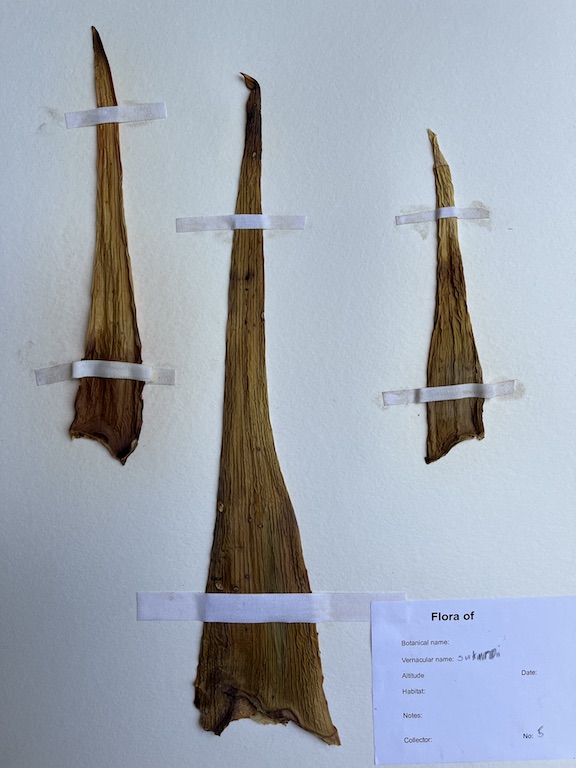
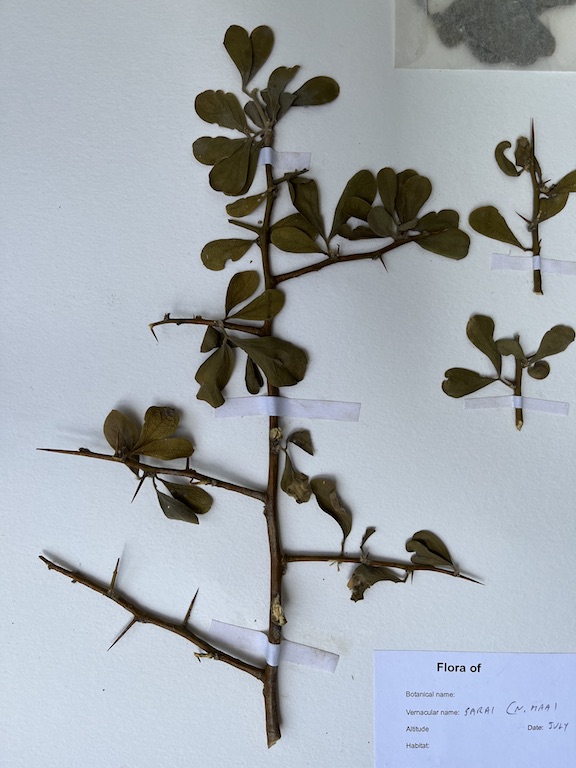
The botanicals used are

The artistry of the woman who prepared the lmala for milk is able to make the most of the flavor tonalities of each wood, or not, depending in her skill. I have fully documented the preparation of the lmala to provide the full context for the ethnobotany.

When milk was plentiful, women selected the botanicals she burned based on the keeping qualities the wood brought to the fermentation process. When milk was abundant, wood was selected that would preserve the milk the longest. Now, when there is rarely cow milk available, women are selecting primary for taste and aroma.

There are many woods to choose from, and so what woods a Samburu woman uses does depend on where she lives — Lowlands choices are different form Highland choices, and choices differ within these broad geographic areas depending on exact elevation and where one is in relationship to mountains, washes, and other features that might favor one plant over another.

Highly sought after woods that grow in the mountains are collected by large groups of women as there is security from wild buffalo and elephants when moving in a group.

The Samburu-English travel Dictionary

Carol Fabert working with Benjamin on this dictionary at the compound of blacksmith Augustine Leboiyere

This Samburu travel dictionary is a bi-lingual English to Samburu dictionary that travelers will find useful when visiting Kenya’s Samburu region. The Samburu and Maasai are closely related cultural groups. They share Maa as a common language, though there are some differences between Maasai and Samburu speakers. This dictionary is technically English and Northern Maa.

The Samburu tribe of Northern Kenya is a semi-nomatic pastoralist culture although the collapse of the local Savannah grassland ecosystem has largely ended pastoralism in the Samburu Lowlands.

Maa does not have a robust written tradition. Besides the bible, there are virtually no published texts in Northern Maa. I developed this dictionary to help me converse with the people I was staying with for the month I was in Kenya in the Summer of 2022. While everyone who has gone to school speaks English, many people, especially older women, but also some young men, are not school-educated. They will probably speak Swahili, but if you don’t, then you will find this dictionary to be invaluable.

People appreciate it when you use words from their language, so I encourage you to keep this dictionary handy. Researchers will find that if you use at least some Maa, even though you have a translator, that you will find more acceptance. Learning the words that prertain to your area of study is also, of course, useful.

If you are a tourist and not familiar with the area at all, the largest town in the Samburu Lowlands is Wamba, which is where I recorded this dictionary, and the biggest city is Maralal, which is located in the Samburu Highlands.

If you have any corrections or additions you’d like to see me incorporate into the dictionary, then please leave a comment. Thank you.

Carol Fabert July 2022

The Samburu Milk Storage Containers

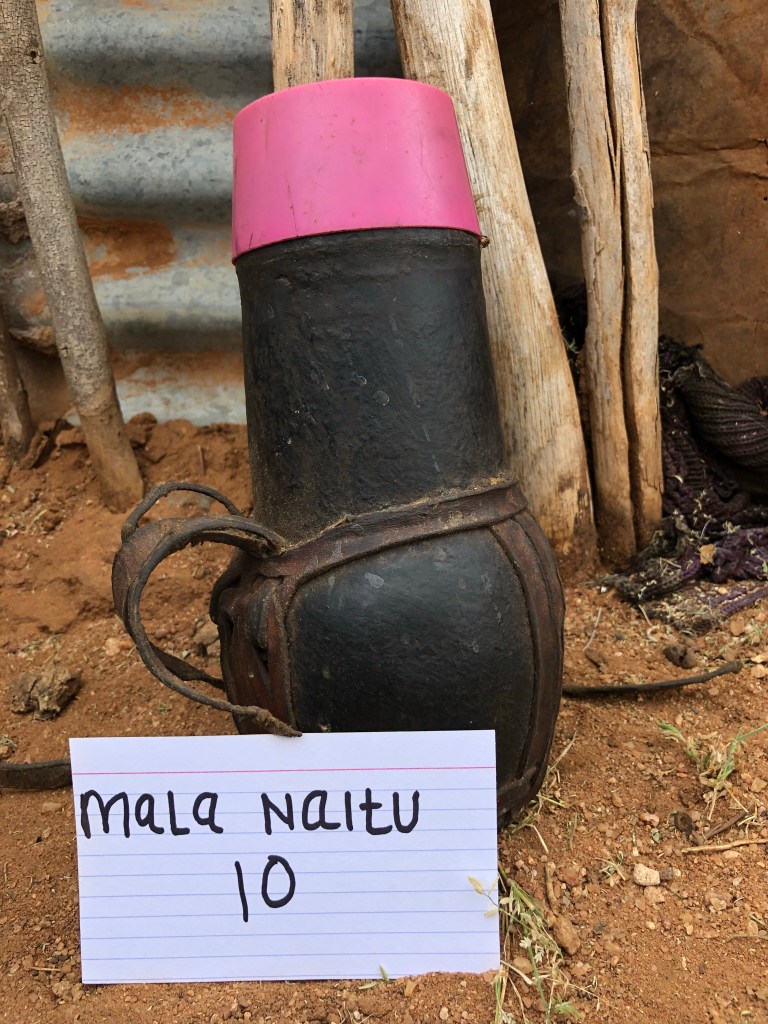
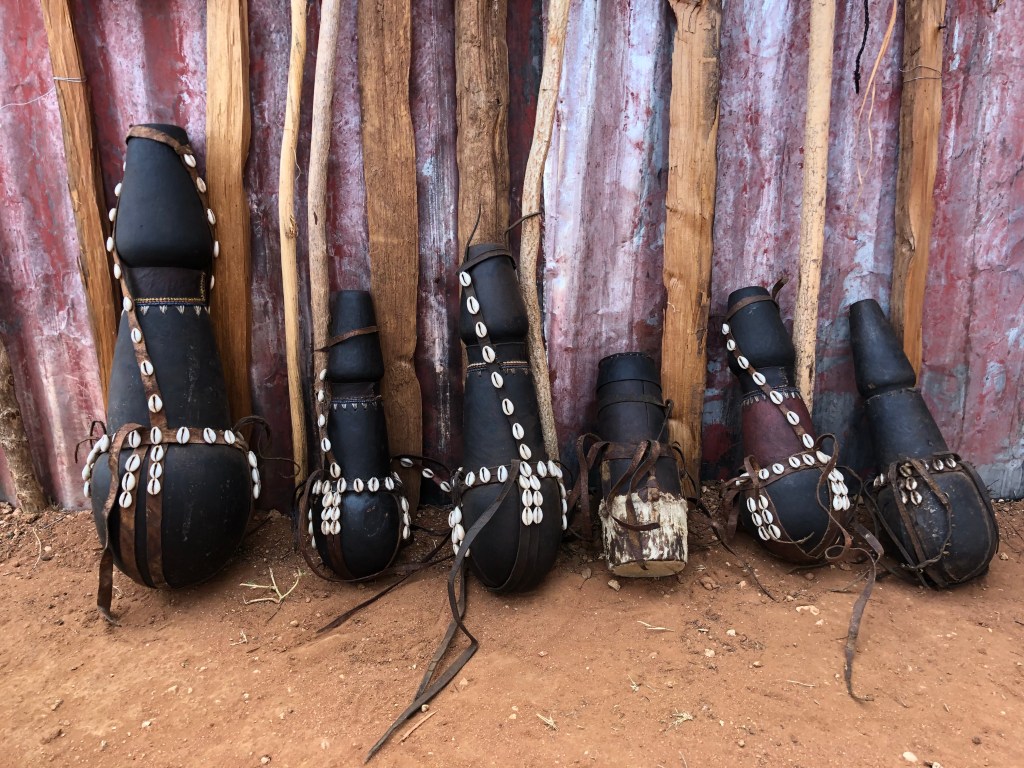
Lmala, Lmasin (pl)

Most people translate the milking containers into the English, “calabash.” While there are a couple milking containers that are made from gourds, most are made from carved wood. There are a little more than twenty shapes for lmala the are still in common use. There may be some containers that no longer exist as the increasingly severe and frequent droughts, beginning in the early 1970s, has decimated the herds of cows. Cows are now gone from the Samburu Lowands. The land no longer supports cows, and both goats and sheep can no longer survive on the limited grasses and shrubs. Camels are the newly important herd animal.

Large swaths of Samburu land suffer sheeting erosion in which all slopes have been washed clean of all topsoil, so rainy season means more erosion rather than green grass.

I have recorded each existing shape within the Lowland community I work, including a written definition of the container including where it fit into the culture of Samburu milk consumption.

The Northern Maa Culinary Dictionary

Words preserve culture. Over a period of fifteen years, with the help of dozens of friends in the Samburu Lowlands near Wamba, Kenya, I have created a culinary dictionary with as fine a level of cultural detail as I was able to achieve. The level of cultural detail I have been able to achieve is unusual in dictionaries. In this instance, I think that I am able to show that within subsistence cuisines in which the diet consists of a handful of ingredients, or only one, that there is much more than meets the eye of the outside viewer. Through this dictionary project, I have done my best to preserve for the Samburu themselves cultural knowledge that is rapidly being lost. I am also offering outsiders a glimpse into what was an exceedingly subtle cuisine centered on what I refer to as smoke cured fermented milk. This is milk fermented in wooden containers sterilized by burning sticks. The tradition of smoke cured fermented milk is not unique to the Samburu — it is a practice shared by many pastoralist traditions within other Kenyan tribal group, even amongst the Kikuyu. The Samburu, however, are amongst the last East African groups who were able to maintain their traditional milk cuisine in its full complexity until relatively recently.

I began working on the Samburu milk cuisine in 1994. It was a vastly richer practice then, than it is now, although even then it will have been diminished by the first of the devastating droughts that began in the early 1970s.

I do not speak Maa. This dictionary was written with the help of Samburu who speak both Maa and English. Every entry has been read by many people. I kept what seemed to have a consensus behind it.

The local Savannah acacia-grassland ecosystem has collapsed. The land no longer even supports goats. With the collapse of the ecosystem that supported pastoralism, Samburu Lowlands pastoralists can no longer live on the land. The entire world of smoke-cured fermented milk, historically the single most important Samburu cultural food, is passing into memory. Young people have little to no experience with smoke cured milks. It has been years since there were cows in the Lowlands. It has been hard to ccess to daily supplies of cow milk, the Samburu milk of choice.

The anthropological literature concerning the Samburu tends to report that “milk” is their staple food (or was), at which point the literature tends to move on to something else. In this, the anthropological literature tends to let us all down – the Samburu and outsiders alike.

To say that “milk” is the staple food of the Samburu is like saying that grape juice is the primary alcoholic drink of the French. Milk is the ingredient in Samburu smoke-cured fermented milk, exactly as grape juice is the ingredient in French wines. The depth and complexity of the Samburu culinary vocabulary is astounding. I suspect that other cultures with beverages at the core of their diet will also have a complex culinary vocabulary.

The Samburu milk tradition is centered on fermentation. Milk from cow, goat, sheep, or camel, are milked into fire-cleaned and smoked hand carved vessels, lmala. Everything about the experience of consuming a milk-based fermented beverage is encoded within their language.

Smoke cured fermented milk is alive, as are all actively fermenting foods. The taste and texture of the milks being fermented change as fermentation progresses, shifting from sweet to neutral to sour. At the same time, the milk’s texture thickens. To a Samburu there are many more aspects of taste and texture beyond the stages of fermentation. I have tried to record the Samburu vocabulary that is used to talk about food — one of us human’s favorite pastimes.

Because milk, a beverage, was the Samburu staple, they have an exceedingly detailed and subtle culinary vocabulary. There are words for taste and texture concepts that we do not have in English. As of 2023, the dictionary of culinary terms, along with related vocabularies, is in a final draft form. I have other projects in front of this, so I will probably not complete the manuscript for publication before 2025.

Here is a sample entry:

Kebebek [adj]. Used to describe a thin mouthfeel or to milk diluted with water. The oppostie of keirucha. By nature, this is a relative term.  Comparing milk textures, camel is the most kebekek followed by cow, sheep, and goat. Milk texture changes seasonally. For example, cow milk, always less kebekek than camel milk, is  seasonally perceived as kebekek when rainy season fodder naturally dilutes its texture. The strongest diluting effect is felt from the Spring “little rain” that fosters strong growth of tender leaves in shrubs, rather than from the “big rain” in late autum and early winter which has a more immediate effect on the grasses. When new growth supports lots of milk, then that milk will be kebebek. Elders monitor the condition of forage from their manyatta homes in part through changes in milk texture as plants adjust to the natural wet and dry cycles of the Northern Kenyan interior climate. The first milk from the cow is kebebek compared with the more keirucha, thick milk, that follows in two to three weeks. Goat milk is made more kebebek for one or two milkings when, after one week on the lkees, range, they are finally taken to water. The diluted milk of unscrupulous market women is kebebek. Chai (tea, milk, water, and sugar) that is more dilute (1:4 milk to water) than the standard recipe (1:2) is kebekek. Ill people may ask for their tea kebekek; as may people who simply prefer it that way. 

Dictionary Methodology & Acknowledgements

This dictionary of Northern Maa — specifically, of milk-related terms — was created over about ten years of intermittent visits to the Samburu Lowlands in Kenya. Roughly 260,000 people speak this version of Maa.

Dictionaries and a written literary tradition do not exist for this language. Some linguists record Maa, but do so using their own specialized alphabet and phonetic rules. A variety of Christian sects from the United States and Europe have Bible translation projects that require a written version of Maa, but no single accepted system exists. Samburu friends once showed me a Bible they had recently acquired. While I was able to read it aloud, they were not — and this was interesting to them as well as to me. Both friends are university educated and read and write English fluently. Clearly, something is wrong with that Bible’s spelling of Maa words. Native speakers stumble over it because it doesn’t accurately represent their language, while I can at least make sounds they understand. Literate Samburu have opinions about how words should be spelled, but they don’t always agree with each other. In seventeenth-century British texts, it is not uncommon to find the same word spelled differently in different instances; as English spelling had not yet been standardized at the time, different authors spelled words differently. Samuel Johnson’s dictionary in Britain (1755), and Noah Webster’s dictionary in America more than 70 years later (1828), went a long way to standardize English spelling. In a quest to  simplify and logicize spelling and to differentiate American English from the British version, Webster made numerous (though functionally minor) changes to a few words, such as “standardize.” Webster thought the “z” sound ought to be represented by a “z,” while the British continue to happily prounounce a “z” for the “s” in their “standardisetoday. For the orthography in this Samburu dictionary, I have gone with the consensus amongst my Samburu friends. I have also recorded several native speakers saying the words, which I have posted on the internet so linguists and lexicographers can hear what the words actually sound like. 

The biggest problem in developing a dictionary from a language that has neither a full lexicon of its own, nor a body of literature to draw nuance from, is that one is entirely dependent on oral speech, and that oral speech is via an English that itself might not be fluent, or which may have acquired its own idiosyncratic meanings. Tastes are notoriously difficult to articulate. Hence, the specialized and easily ridiculed vocabulary of the wine trade with its “blackberry and a hint of oak” — flavors few of us can clearly recognize and, even if we could when isolated, cannot differentiate them amongst the blend of flavors that is a sip of wine. That said, we have described by analogy: comparing one flavor with another to help clarify taste terms that lack direct analogues in English. Salty, sour, and bitter are easy — salt is salty; yogurt is sour; orange rind is bitter — because there is a cross-cultural understanding of these fundamental tongue-tastes. The difficulty comes when we encounter words for which we don’t have an English analogue. Probably the most frustrating Samburu word for us is keisukut, which is the taste of milk in the final state of sourness. The curds have solidified. If you don’t soon do something with it, the milk goes off and becomes kong’u (spoiled and inedible). The Samburu kept using “salty” to describe this term and, indeed, this is how it is defined in Jon Holtzman’s book on Samburu food. It took years of visits to tease out that there is no salty taste in keisiicho, but something more akin to the bitterness of the pith of an orange combined with an intense sourness. 

I have done my best to reflect the understanding of my Samburu friends and informants. The culture is changing so rapidly that already a great deal has been lost since 2000, and like elsewhere, change is accelerating — humans are good at change in response to changing conditions. Short walks from Lengusaka, Wamba, Lodomoque, and other towns bring you to settlements and a way of life that seems eternal. But profound changes have already occurred, precipitated by the twin forces of ecological degradation and economic development. The loss of Samburu cow herds began with the drought of 1984, and has continued with each subsequent drought. Each of the major dry spells can be understood as a lottery. The cows are moved from drier places to wetter places. If your cows are well positioned to move to good pasture, and if the path to that pasture you choose has enough forage and water, then you win. If your path doesn’t work out, or the place you aim for can no longer support your cows once they get there, then you lose. In the conditions of the deep droughts, when you lose, you lose everything — dropping from 200 cows to zero. And it isn’t possible to build back. Demand for forage from goats and sheep is relentless. The land’s carrying capacity is reduced with each severe drought, as the land is both structurally damaged and its recovery retarded by continued grazing pressure. And thus, over the last thirty years, the cow-based pastoralism of the Samburu has been reduced to what it is today: at best, a peripheral economic and social activity. 

Because the Samburu milk culture is cow-centric, the virtual elimination of cow milk from the Samburu diet has meant an erosion of milk-related connoisseurship and cultural practices. Once we recognized this, we began to focus our research on older women, the only people understood to still retain deep, milk-related cultural knowledge. Even then, lacking practice with cow milk, it is very possible that some of the data collected for this dictionary is derived from memories that may be a decade or more old. This is probably a general problem with all ethnographic or dialect dictionaries collected towards the end of cultural cycles. 

As the cultural practices that underpin the Samburu milk-related culinary vocabulary, and, in fact, as Northern Maa itself is under pressure, we have made an effort to offer comparisons between words so that we can at least preserve some of the relationships between them to retain cultural information that will otherwise be lost.

Acknowledgements

These native Samburu speakers helped greatly with this project. In July, 2022, over a dozen people came to help push me over the top, completing aspects of my Samburu milk project that had seemed impossible to finish.

Longhiro Lekudere
Robin Leparsanti

More

Use the following links to explore additional content collected through the Samburu Milk Project.

Introduction to the Samburu Milk Project
Stages of Milk Fermentation
Milk Taste and Texture Terms
Botanicals for Lmala Preparation
The Culture of Milk — Idioms and Expressions
Other Samburu Words
Milk, Music and Religion — scheduled completion in late 2025
Milking Songs — scheduled completion in late 2025

This is the draft manuscript of the Samburu Milk Project, © 2024 William Rubel. 

Nkirrau, Nkirau

A gourd or calabash milk container. Samburu, Kenya. Nkirrai, nkirau

Note: this is a draft. Please let me know if you have comments, suggestions, or pictures.

A gourd calabash with a flat-topped cup lid similar in style to the mala enkoriong. The dried gourd is purchased from the Maasai. This is a storage, not a milking container. If you want fresh milk, kule nairobi, then you clean it first, but if you want kule nuato, you don’t clean the nkirrau. The gourd is used by anybody.