Noun
Pronunc. XXX
Curds.
Ing’anayoi is the curdled mix of butter particles and whey that indicates the breaking point of cream.
Return to Stages of Milk Fermentation.
This is the draft manuscript of the Samburu Milk Project, © 2024 William Rubel.
This is the location for all new files added in 2024-2025
Noun
Pronunc. XXX
Curds.
Ing’anayoi is the curdled mix of butter particles and whey that indicates the breaking point of cream.
Return to Stages of Milk Fermentation.
This is the draft manuscript of the Samburu Milk Project, © 2024 William Rubel.
Noun
Pronunciation: tahr’
Whey from kule naoto (sour milk).
Return to Stages of Milk Fermentation.
This is the draft manuscript of the Samburu Milk Project, © 2024 William Rubel.
Noun.
Pronunc. n-yorn’-nyoh.
Curds; butter.
Ngorno has two meanings. It means curds, and it also means butter. The curd/butter concept is linked in the Northern Maa dialect, as butter is made from churned curd. In addition to making butter from curds, when ngorno is cooked for 30 minutes to an hour or so (shorter time on a wood fire, longer time on a charcoal fire, reflecting differences in the fire’s heat), it makes nkeisiich (ricotta).
One Samburu friend tells that when the nkeisiich is cooked longer, to the point it begins to caramelize, then it becomes ranganya. This will be related to the Norwegian whey cheeses of gjetost (when made from goat milk) and mysost (when made from cow milk). Like these Scandinavian cheeses, ranganya is sweet. Its most common use was as a treat for children. (This statement is properly past tense, as it has been a long time since there was enough milk to produce a surplus for processing into longer-keeping products.)
It is important to note that you are not able to recreate the flavor and aroma of any Samburu milk product unless you start with milk that has been infused with a botanical that was burned to suffuse the inside surface of the wooden lmala with a fine film of soot residue. Milk that is allowed to sour and clabber inside the lmala retains a taste and aroma profile that traces back to the wood used in the milk preparation. If there is further storage, of a processed milk product, such as for ngorno (butter), then it stored in a container that has been cleaned with cow urine and then rinsed with water.
See Recipe – Ngorno.
Return to Stages of Milk Fermentation.
This is the draft manuscript of the Samburu Milk Project, © 2024 William Rubel.
Noun
Pronunciation: kar-dah-di’.
Milk diluted with water at a ratio of 1:5 milk to water.
Return to Stages of Milk Fermentation.
This is the draft manuscript of the Samburu Milk Project, © 2024 William Rubel.
The concepts and actions of fermenting milk have permeated the Samburu culture in the form of common idioms, sayings, and expressions. Here are some examples; many of them pertain specifically to milk.
Aibukorei nkishu kule
Literal translation: Making the cow to pour out the milk.
Meaning: It is taboo for Samburu people to throw away milk. Rather than pour it out, if there is too much milk, they will leave it in a container for the cows to kick. “People say, ‘Put it there, where the cows will knock it over.’” [Did Longhiro say this?]
Aitong’u ake`ana ng’oto le ng’iron
Literal translation: To dirty like mama (ng’oto lke ng’iron)
Meaning: To give but not give, with an element of deception. The story of Mama ng’oto le ng’iron is about a woman who slaughters a small animal, such as a goat. Some children come over, but rather than give them some meat, she smears their mouths and hands with fat. She sends them away and everyone thinks they have eaten.
Amintaa lng’ejep loo lkujuka
Literal translation: Don’t make it like the tongue of the lkujuka clan.
Meaning: This saying is used when you are kept waiting too long for a meal. Its origin story is that Samburu came to the home of people from the lkujuka clan who were boiling a cow’s tongue. The Ikujuka people did not want to share their meal but could not eat it in front of their visitors. When the visitors eventually leave, nothing is left in the Ikujuka pot but sludge.
Antesieku amu eisiichiete kule
Literal translation: Hurry up, the milk is going sour.
Meaning: An expression indicating impatience.
Apuru ake ana ngoto lengiro
Literal translation: Power in your tongue.
Meaning: “This woman puts all these calabashes around her and pretends to have lots of milk and claims it — power in your tongue. They love her. In the end, she did get a lot. God honored that woman and gave her more cows to have milk to fill those containers. Dream big — can get big-big — but if you have no dream you get nothing. She did the work. Made the calabashes. Faith. God honors faith and faith honors God.” — Longhiro
Kakisha
Literal translation: Lovers’ song; a love song.
Meaning: A song normally sung by women or girls while collecting firewood away from the manyatta. Such a song is not sung in the presence of men, although it talks about love and lovers.
Keataa keitong yuoo nkamilak`
Literal translation: Saliva is about to drop from our mouths.
Meaning: When Samburu smell meat frying on the fire, they need to be served because they have too much saliva in their mouths. This saying is used when you don’t want to wait any longer for food to be served and can see no reason to not be eating.
Keata kule lorien
Literal translation: The milk has the preparatory wood; the milk has the taste of the lorien (a botanical used to cleanse the interior of the lmala).
Meaning: Everything is in perfect balance in the fermented milk. The milk’s wood aroma (nkuama) and taste (loishiamunoi) are in just the right proportion. This balance can be sensed at the earlier, fresher stages of development of fermented milk, before it has become sour, since the taste perception of wood’s bitterness declines as the sourness of the milk increases. This expression is an analogue of keata nkop lorien (see below), which is an idiom that refers to the whole world being in balance.
Keata nkop lorien
Literal translation: Good things are coming.
Meaning: A description of a perfect time, when all is right with the world. The animals are healthy and satisfied, and the land is green. This is an analogue of keata kule lorien (see above), which refers specifically to milk being in balance, rather than the whole world.
Keirobi osheke
Literal translation: Cold stomach.
Meaning: A phrase used to refer to particularly satisfying food, something that means you can go for a long time before you get hungry — like milk.
Keisuch nkut
Literal translation: It can rinse your mouth.
Meaning: When there is very little of the food to eat, but each bite is delicious. Said of a delicacy that is being shared, for example, liver fried in ghee. You would eat more of it if there was more. Keisuch is the final rinse when cleaning. [Is this when cleaning a lmala? Leave your remark in the Comments below.]
Kemelok ana kule enkolong
Literal translation: As sweet as the milk of the dry season.
Meaning: Milk during the dry season is sweet, because it is fatty.
Keng’ari ne sioote
Literal translation: Even as little as one lid of milk can be shared.
Meaning: As with matam neng’ige (below), this phrase encourages sharing: Even if it is too small to share, let’s share it anyway.
Ke’taakan “na’penyee” ana mala
Literal translation: [What is the exact translation of this phrase? Leave your remarks in the Comments below.]
Meaning: Clean, well-kept milk and lmala. Perfection in cleanliness. The owner of this calabash is tidy and the milk has been well-preserved by the ke’taakan lady.
Kudung’i nkiyok inyieita
Literal translation: So delicious you will not even feel your ear being cut.
Meaning: A compliment given to the host when the meal is especially good.
Kule e ngutuk
Literal translation: Milk in my mouth.
Meaning: Something precious to be savoured. A phrase commonly used by adolescent girls to refer to their best female friends. A dear name; a dear friend; a lady with white teeth.
Matam neng’ige
Literal translation: Let us share with a toothbrush.
Meaning: As with keng’ari ne sioote (above), a phrase to encourage sharing: Even if it is too small to share, let’s share it anyway.
Matitip ana njuloti ee ntare e le kirenyei
Literal translation: As if you are eating something as delicious as njuloti ee ntare e le kirenyei (milk and blood).
Meaning: Let’s share, taking little by little; sharing out. If you bring 1 kg of sugar and share it in tiny bites, everyone will get a little. When there are many people, you have enough for a sip or small piece per person.
Menya idia
Literal translation: Even a dog would not eat it.
Meaning: Very bad food. Might be used when in the bush and one roasts a dead animal whose meat is going off. Might also be used to refer to food one ate while traveling outside of one’s home area, or food served at a large ceremony. Not used to refer to the food of one’s friends or anyone identifiable.
Mincho ng’utunyi
Literal translation: Too delicious to give to your mother.
Meaning: Food that is so nice you are unwilling to share it, even with your own mother. Might be said about good milk or meat of which there is not enough to share. Less extreme than keisuch nkut (above); there is a little more, but still not enough to sate.
Modung’oi
Literal translation: [What is the literal translation? Leave your remarks in the Comments below.]
Meaning: So delicious that you just keep eating even if you have had enough. The food is so good that you just can’t stop eating it.
Naishi o kule
Literal translation: Honey and milk.
Meaning: This expression is normally used during blessings by elders who wish one a prosperous life full of good things symbolised by milk and honey.
Ndaa peidaaya
Literal translation: Food to disperse.
Meaning: Encouraging people to share without holding back and eat all the food, because it won’t keep. Might be said to someone who is complaining they have given away too much food, as a way of saying they did the right thing.
Ndaa taa kini mataa kumo
Literal translation: The food is not much and we are many.
Meaning: Although there is not much food to share with so many people in the house, the hosts would rather have more children and less food than fewer children and more food. A positive expression.
Sayiet ake
Literal translation: Like poison.
Meaning: If the animals eat the plant iodwaporo [What is the Latin binomial for this plant? Leave your remarks in Comments below], their milk becomes very bitter. When drinking this milk, you might comment that it is like tasting poison.
Sekeng’ei ringa (Nkoro ai naiputa kule lturoto)
Literal translation: [What is the literal translation for this phrase? Leave your remarks in the Comments below.]
Meaning: Story about milk in the form of a song. The story deals with stolen cattle that produce a lot of milk, enough to fill a well. The owners find the milk and drink it.
??? [What is the Samburu phrase that fits the following meaning? Leave your remarks in the Comments below.]
Literal translation: My calabash is about to explode. [Is this correct? Leave your remarks in the Comments below.]
Meaning: While shaking the lmala to clean it, the pressure causes the lid to come off. The lid explodes. This expression is used when you want to claim good things or bring good things to yourself. You are poor and have no goats, so you use this proverb to make yourself wealthy. To have faith in oneself.
More
Introduction to the Samburu Milk Project
Dictionary Methodology and Acknowledgements
Stages of Milk Fermentation
Milk Taste and Texture Terms
Types of Milk Containers (Lmalasin)
Botanicals for Lmala Preparation
The Culture of Milk — Idioms and Expressions
Other Samburu Words
Milk, Music and Religion — scheduled completion in late 2025
Milking Songs — scheduled completion in late 2025
This is the draft manuscript of the Samburu Milk Project, © 2024 William Rubel.
The fermentation process begins with the lmala container being cleaned with burning botanicals. Kule (milk) is added to the container and then the milk goes through stages of fermentation; if left too long, it goes bad. The Samburu people of northern Kenya have traditionally fermented milk from their animal herds in containers made of wood or gourd, known as lmala (singular) and lmalasin (plural).
The stages of milk fermentation, from fresh to rotten, proceed in the following order:
Explore Samburu words about milk fermentation
Each link below will take you to an in-depth description of the term, including a pronunciation guide, and how the word relates to milk fermentation.
I encourage you to begin with kule to gain a basic understanding of the importance of fermented milk in Samburu culture.
kule – general term for milk
More
Use the following links to explore additional content collected through the Samburu Milk Project.
Introduction to the Samburu Milk Project
Dictionary Methodology and Acknowledgements
Milk Taste and Texture Terms
Types of Milk Containers (Lmalasin)
Botanicals for Lmala Preparation
The Culture of Milk — Common Idioms and Expressions
Other Samburu Words
Milk, Music, and Religion — scheduled completion in late 2025
Milking Songs — scheduled completion in late 2025
This is the draft manuscript of the Samburu Milk Project, © 2024 William Rubel.
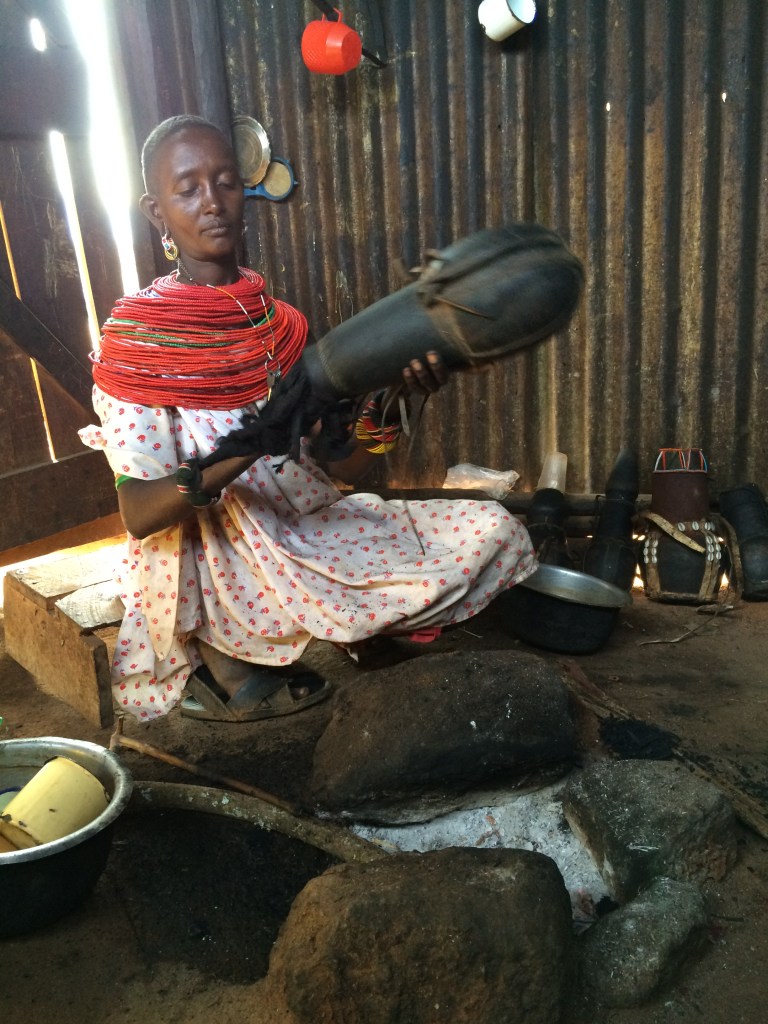
The Samburu do not like milk with bits of ember or ash in it. Other tribes in the region serve milk with black specks from the process of sterilizing with burning sticks, so preference for a milk that is totally clean, totally white when poured , which is how most of the world prefers the milk, in this context is a cultural preference amongst the Samburu. Their white milk – and the milk will be left in the lmala to ferment to one of their preferred stages of consumption – differentiates it from some of the milks from other nearby tribes, like the Turkana.
This woman, and I apologize for forgetting her name, is the wife of Chief Stephen Loldepe. I have stayed with her. They live in a concrete house. This is an outdoor kitchen retaining the three rock kitchen fire emplacement common to the manyatta stick huts.
Samburu have long been semi-nomadic pastoralists, so their traditional buildings can be disassembled, with the larger stick used for the hut framework can be re-used. This is a modern outdoor kitchen with tall galvanized walls.
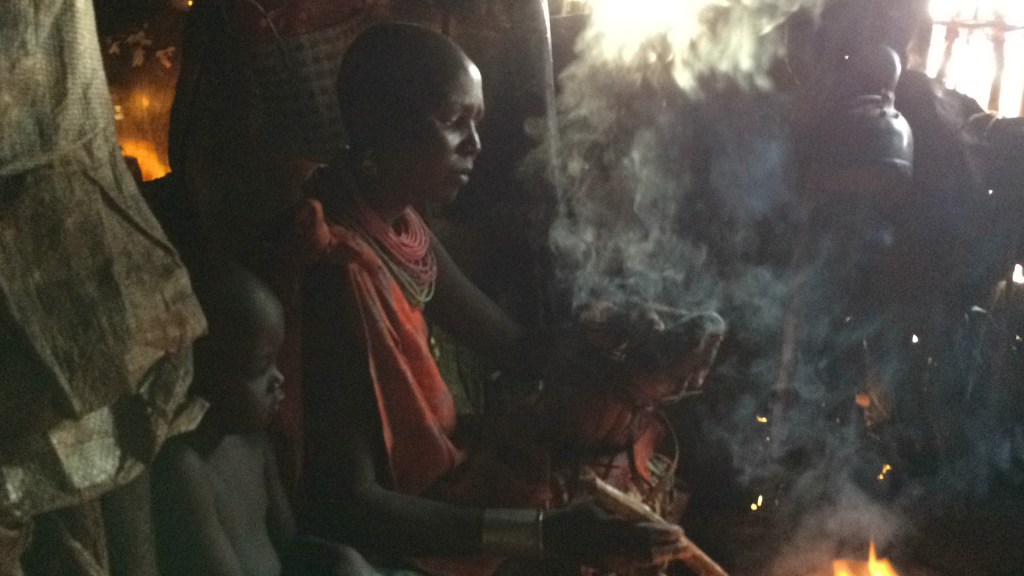
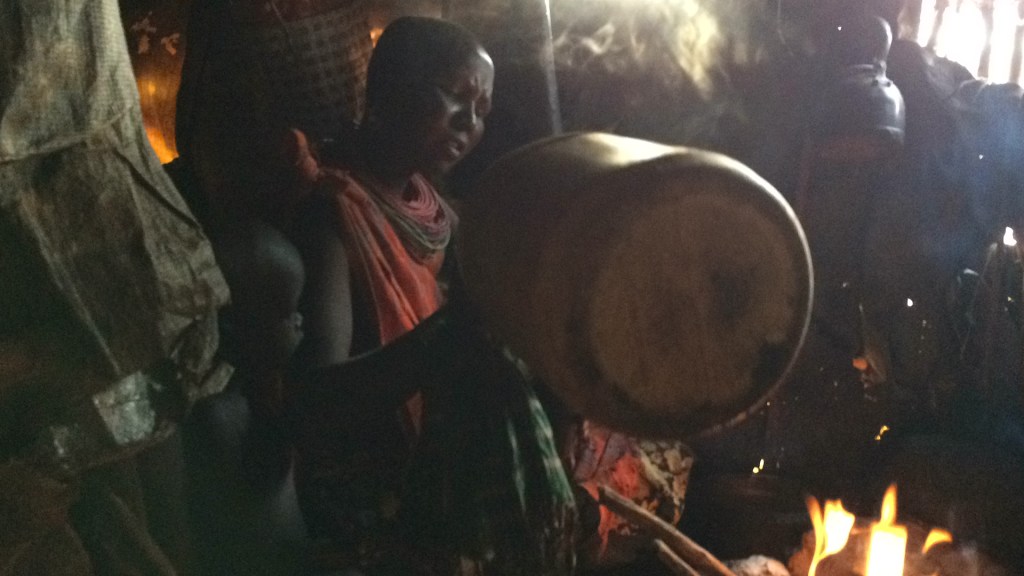
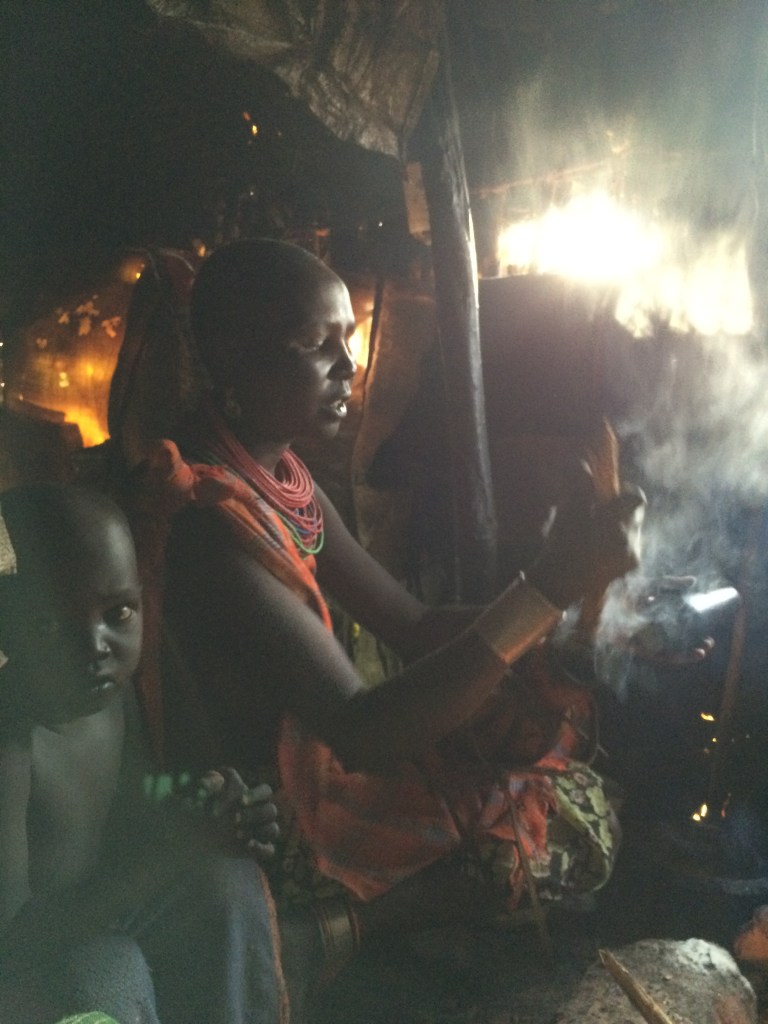
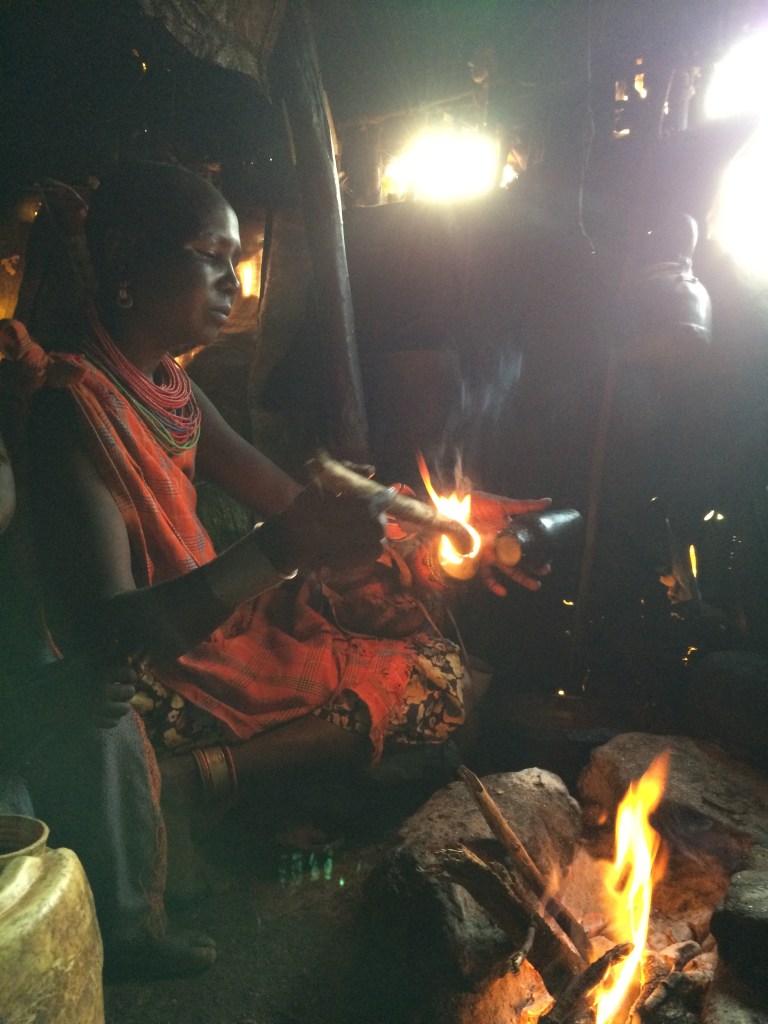


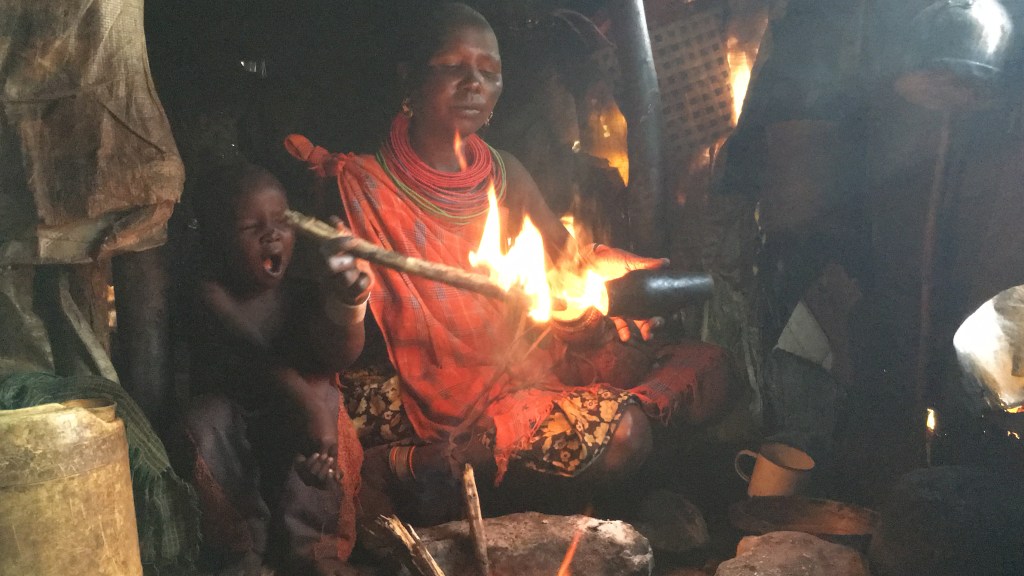

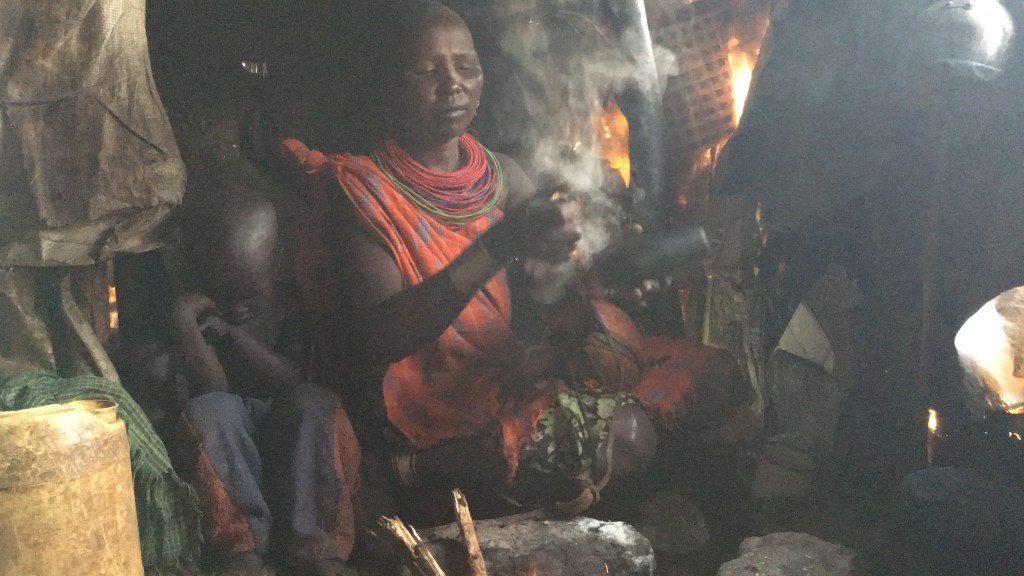


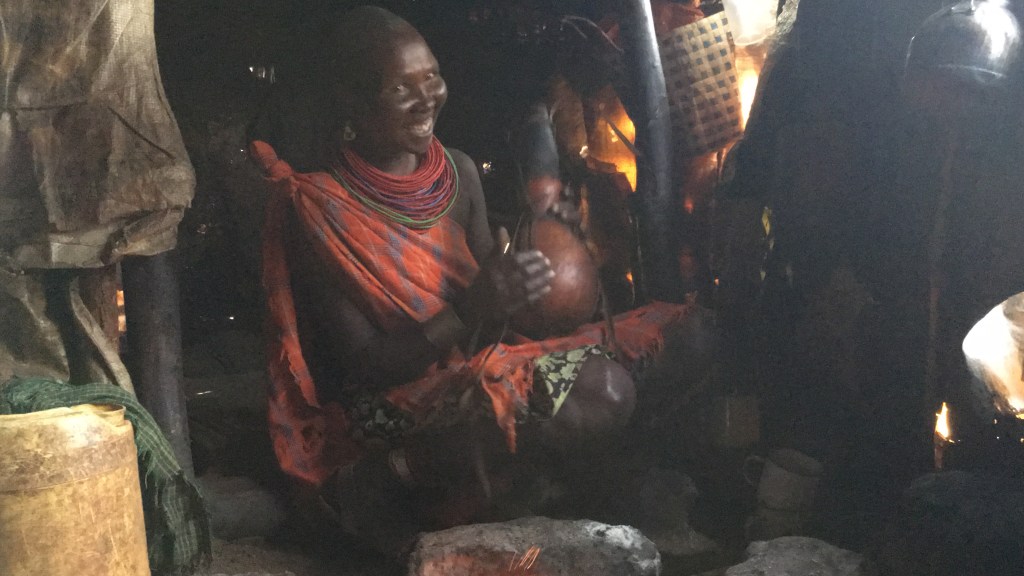
Most lmala are made from wood. When you go to the region, people will translate “lmala” as “calabash.” As gourd milk containers are few in number, I think it is best to translate “lmala” as “milking container.” I have met one woman who I know for a fact sometimes uses more than one wood time in order to influence the final flavor and aroma of the milk. The fine tuning in terms of taste comes with how the lmala is cleaned after it has been sufficiently heated. Care in cleaning means everything!


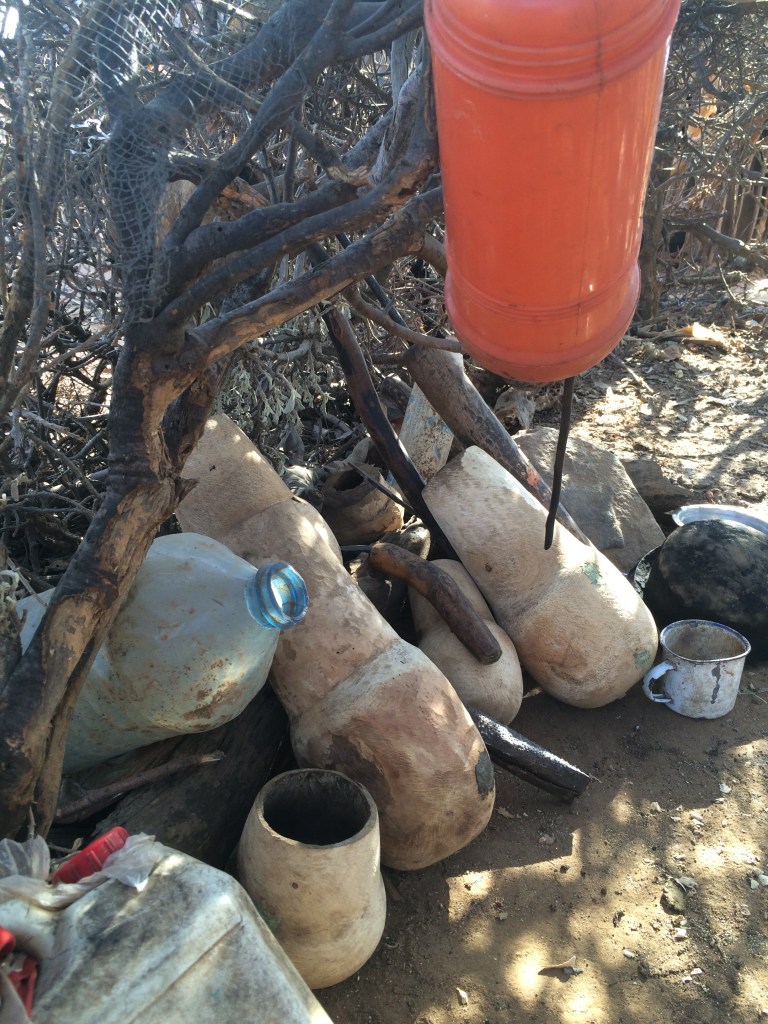

We see here one gourd container in the upper left image, but all the others are made of wood. I took the photos of unfinished lmala in 2018 as I was walking around the manyatta in the West Gate Conservancy, where I was staying. The inside is carved out by softening the wood by burning with embers and then scraping the ash with a shallow spoon-shaped carving tool forged by a local blacksmith. Very thin walls and elegant containers are crafted using this carving system.
 Samburu Research