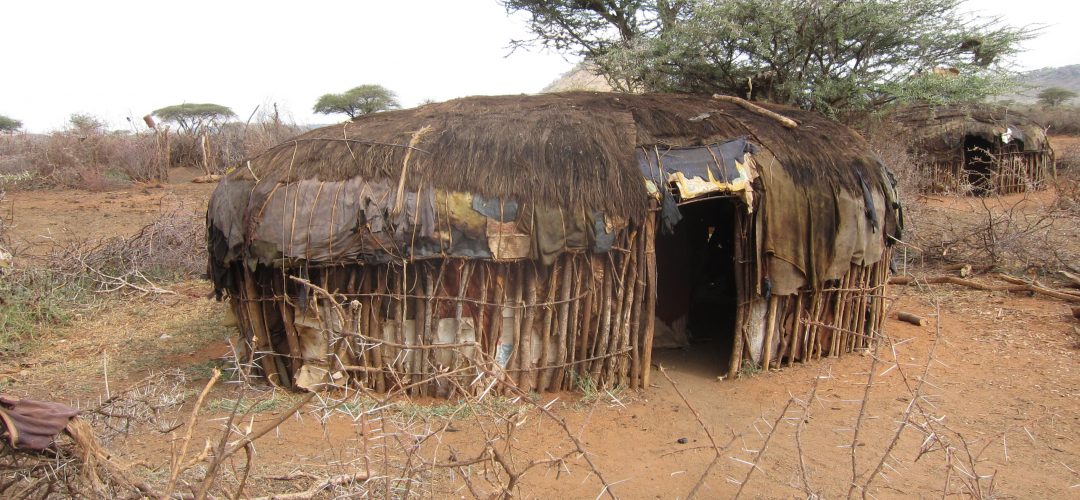
Idris Lekaria, Director of the Memita Disables Tree Nursery is pleased to announce that his nursery has been contracted to assist schools in the region to plant trees in accordance with the government’s commitment to afforestation. He will be supplying 50 trees each to schools in the Wamba Region.
Augustine’s School: Monday is Clay Day
Augustine’s School is an outdoor school. The outdoors in Samburu is a wonderful place for running a school. For craft projects, like clay, there is no clean up! The kids bring the clay back from he gully. It is dry. They use small rocks to pound the clay into a powder. Then, just add water! Imagination does the rest. And, the space is endless, so whether working with ten kids or fifty, the space is flexible. Villagers often come to the school to watch what is going on.
Augustine’s School, an Innovative School and Lunch Program in Wamba, Kenya

Augustine’s School is located on the outskirts of Wamba, Kenya within the Blacksmithing Clan’s District. The school daily serves 40 students ranging in age from 3 to 8. Carol Fabert, a retired American special needs teacher is the Headmaster. Augustine is the local director. He is assisted by four teaching staff, plus a cook. The school incudes a meals program that daily provides fruits and vegetables in addition to beans and ugali to the school’s students, plus up to 60 additional children, depending on circumstances.

The curriculum is innovative. Instruction takes place in three languages, Northern Maa, English, and Swahili. Students learn to read, do basic math, and participate in age appropriate activities — lots of singing, Samburu dance, and arts and crafts projects. The integration of academics with play is unusual for Kenya, and does not exist elsewhere in Samburu East.
The school is providing children from the poorest section of Samburu culture, children of blacksmiths, charcoal sellers, and children of the bee keeping clan, with an intensive head start on their path to education, and a way out of the structural poverty of the Samburu pastoralist territory. The salaries paid to the teachers and cook, and the food provided to the between 40 and 100 children being fed at Augustine’s school, stabilizes multiple families who are going through exceedingly hard times within the context of the collapse of pastoralism locally due to the cumulative impacts of climate change intersecting with over grazing, and now with the inflation that followed Covid and the War in Ukraine.
If you might be interested in contributing to the support of Augustine’s School, please use the contact form to get in touch. Even small donations make a difference. This is a project that changes lives.
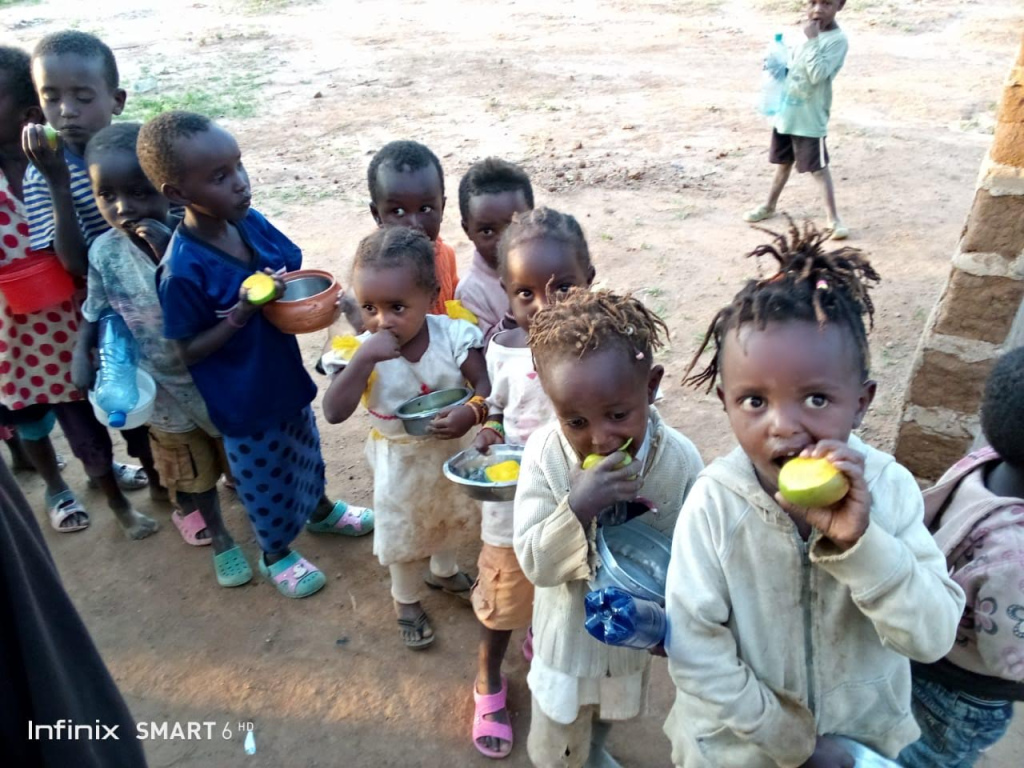
Students in line for food. Augustine’s School makes a big effort to include fruit and vegetable along with starches. Fruits and vegetables are not a part of the standard Samburu diet.

Books shipped from the USA arriving at Augustine’s School. Donations of books always welcome!
Idris Lekaria’s Memita Disables Tree Nursery, Wamba, Kenya
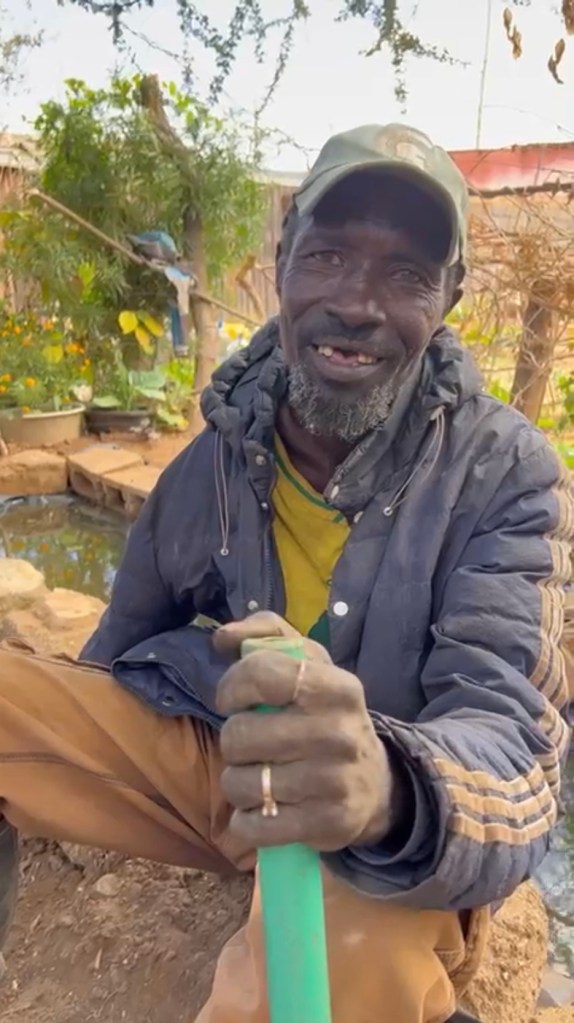
Idris Lekaria, horticulturalist, is the founding director of the Memita Disables Tree Nursery, in Wamba, Kenya, is the only nursery in Samburu East. As a nursery specializing in trees, its primary focus is afforestation, or, as founder Idris Lekaria puts it, “Making the land green again, and fruity.” Food scarcity is an issue so one component of the nursery’s tree growing program is to grow fruit trees and fruit bearing vines, like passion fruit. Then nursery also grown vegetables and ornamental plants, produce pots and concrete tables, and offers training programs in what for the Samburu is the new art of gardening. Idris is a well trained horticulturalist who has developed a set of best practices for horticultural projects in the arid environment of the arid equatorial North.


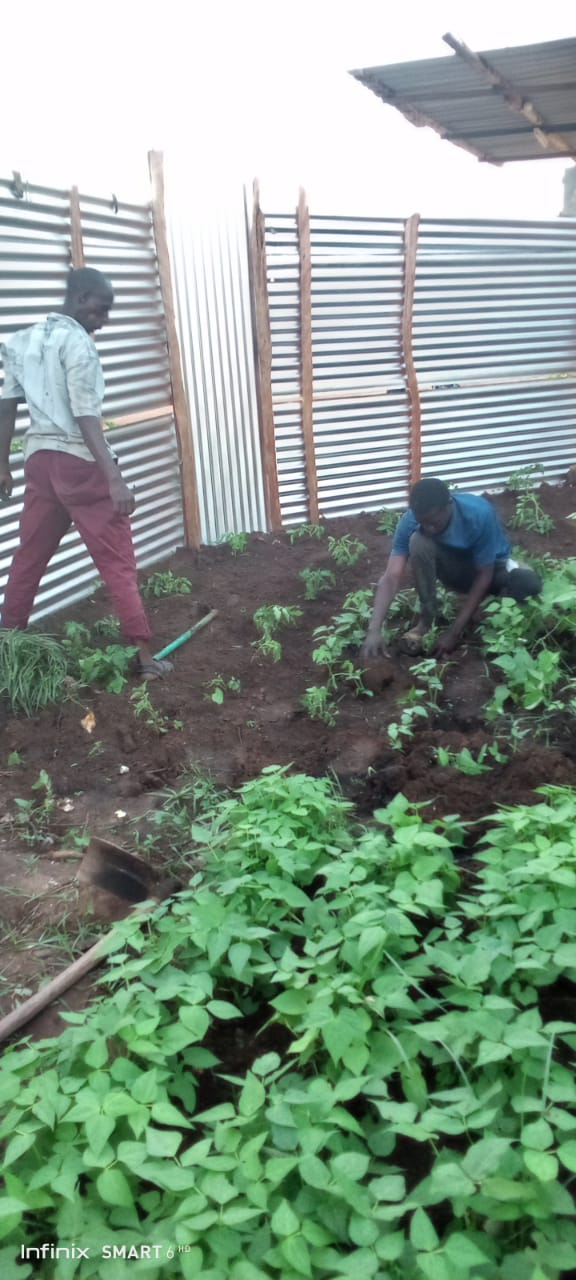

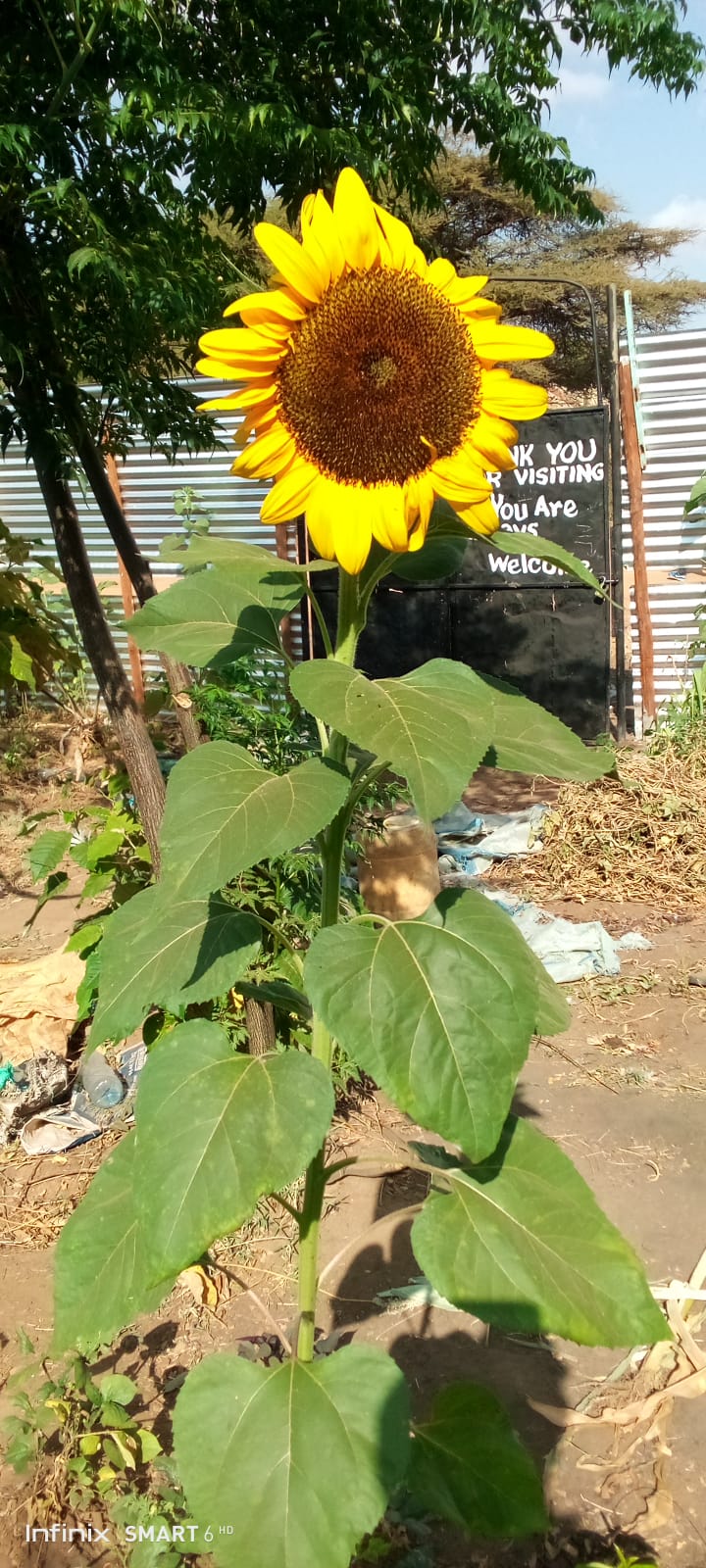

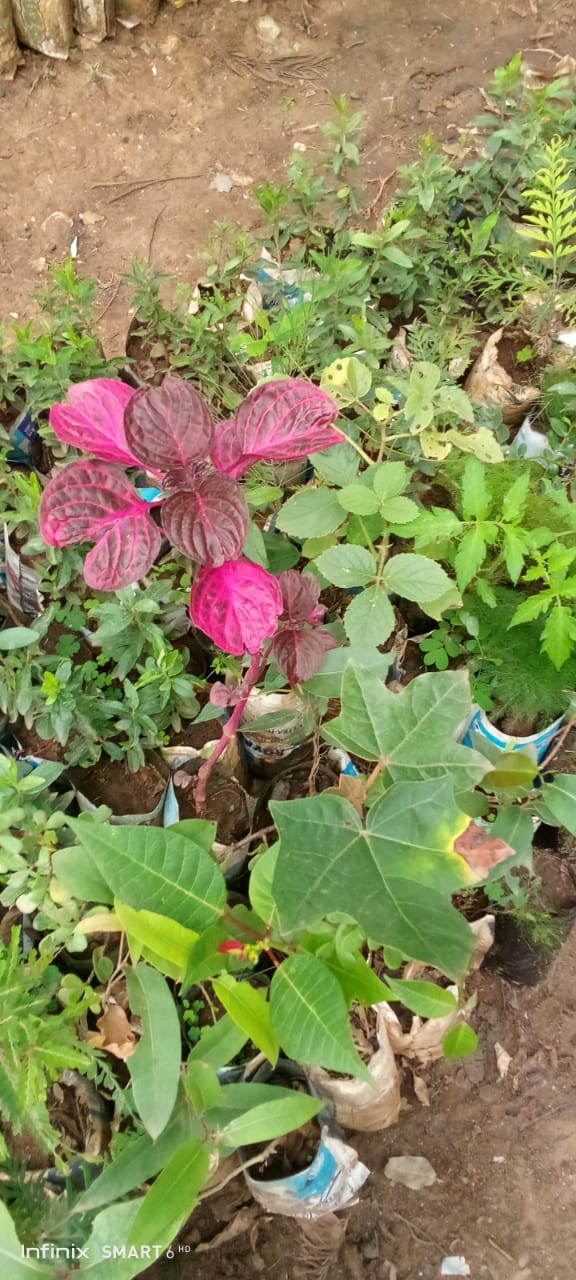


If you are interested in supporting this nursery, even small donations would make a difference. There are also opportunities for staying at the nursery in Wamba to help with Idris’ project through a work-stay ecotourism experience. Use the contact form if you are interested and I will get in touch with Idris.
Samburu Culinary Dictionary : Kadakai
This is a draft definition from my Samburu Research dictionary of culinary taste and texture terns.
Kadadai, adj. Dilute almost to the point of absolute tastelessness. 1:5 Milk to water is kadadai. Applies to anything that is so dilute there is basically no nutritional value in the dish. For example, a watery porridge or a “meat” soup in which the meat content is so small it is basically not there. Past kadadai, the dilution is ulaash.
Kenyan Stories by Babu. The Thief’s Hand
Babu, whose given name is Donald Zakao, is a storyteller living in Wamba, Kenya. Babu means “grandfather.” Donald has been called “Babu” since he was four years old. A gifted story teller, “The Thief’s Hand,” is a good example of his craft. I recorded this story in the 1990s.
Violent! Yes.
Samburu woman cleaning a lmala — milking container
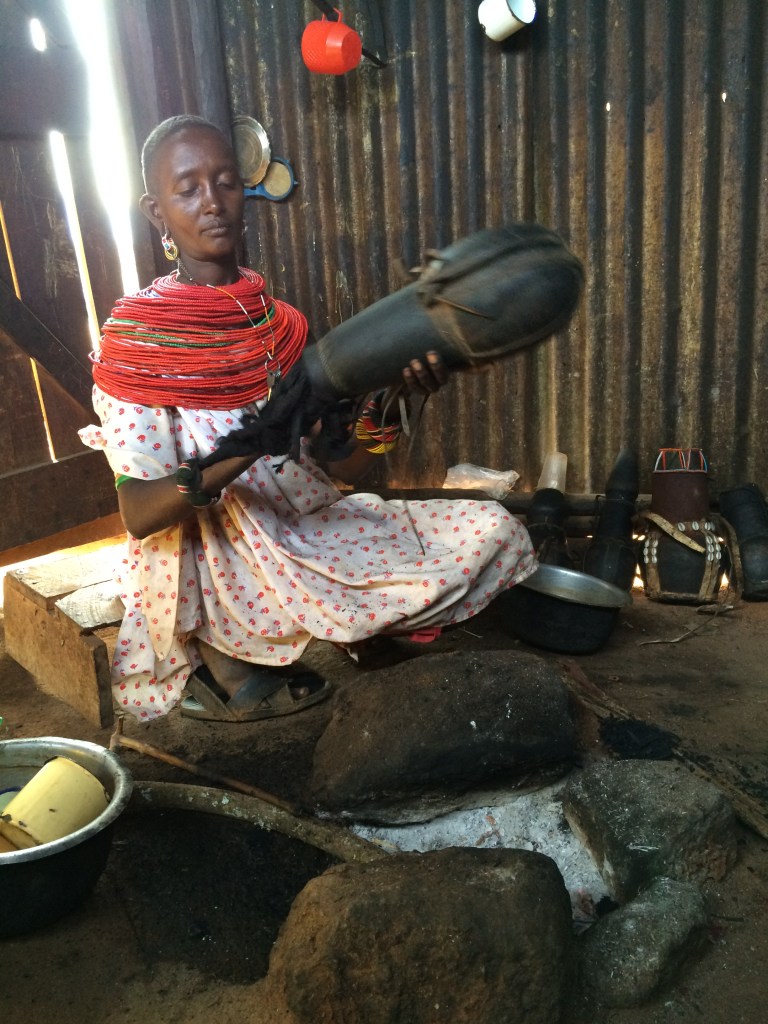
The Samburu do not like milk with bits of ember or ash in it. Other tribes in the region serve milk with black specks from the process of sterilizing with burning sticks, so preference for a milk that is totally clean, totally white when poured , which is how most of the world prefers the milk, in this context is a cultural preference amongst the Samburu. Their white milk – and the milk will be left in the lmala to ferment to one of their preferred stages of consumption – differentiates it from some of the milks from other nearby tribes, like the Turkana.
This woman, and I apologize for forgetting her name, is the wife of Chief Stephen Loldepe. I have stayed with her. They live in a concrete house. This is an outdoor kitchen retaining the three rock kitchen fire emplacement common to the manyatta stick huts.
Samburu have long been semi-nomadic pastoralists, so their traditional buildings can be disassembled, with the larger stick used for the hut framework can be re-used. This is a modern outdoor kitchen with tall galvanized walls.
Samburu milk cuisine: cleaning with fire
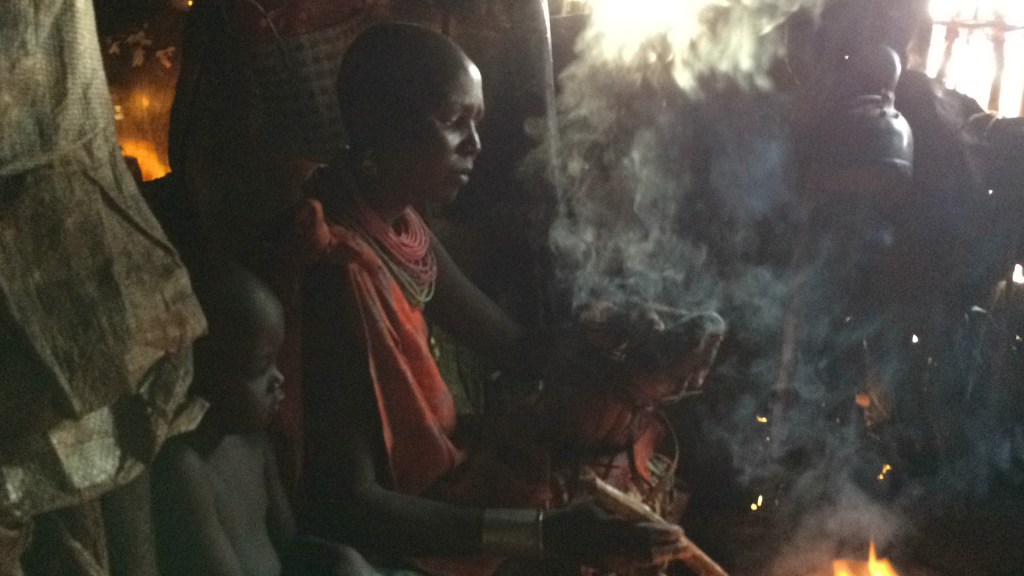
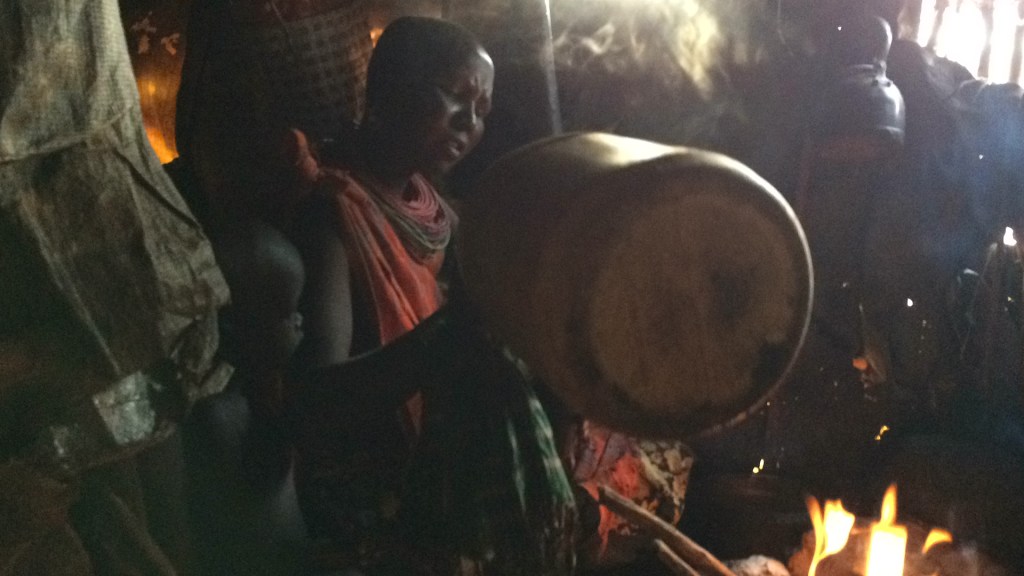
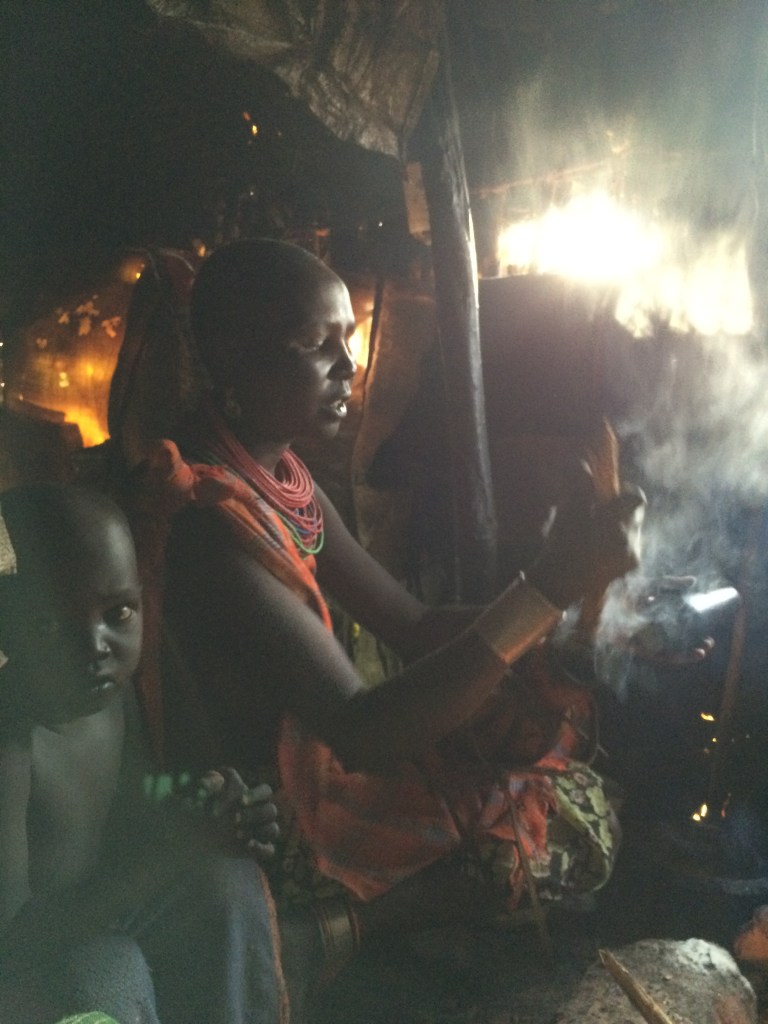
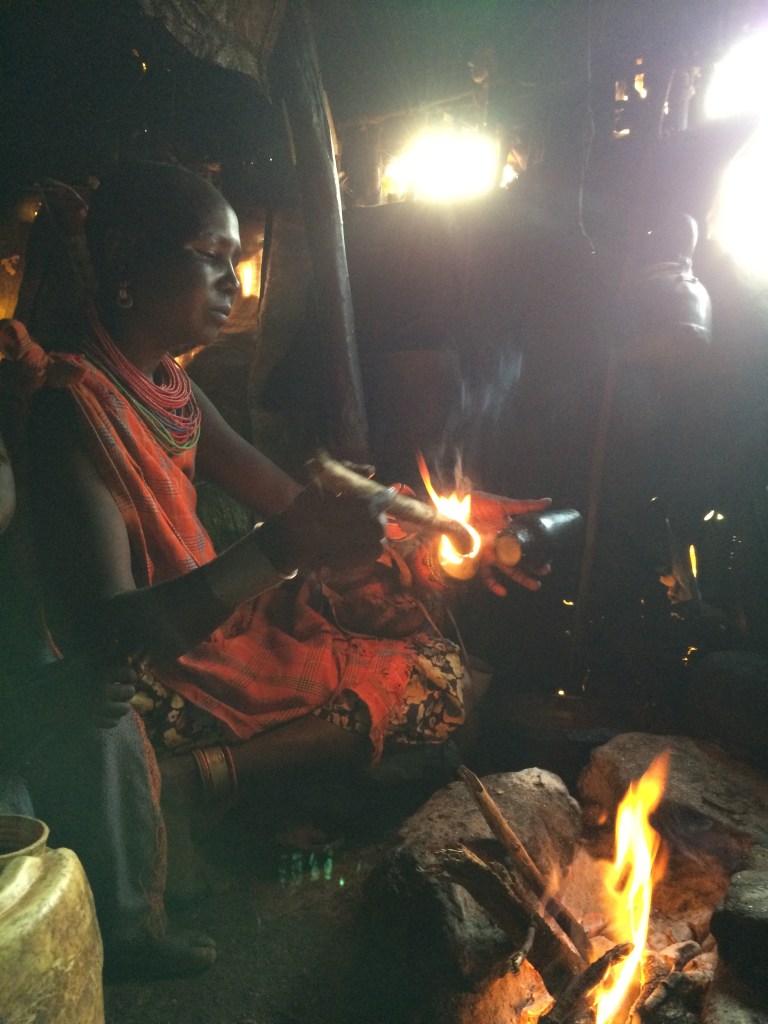


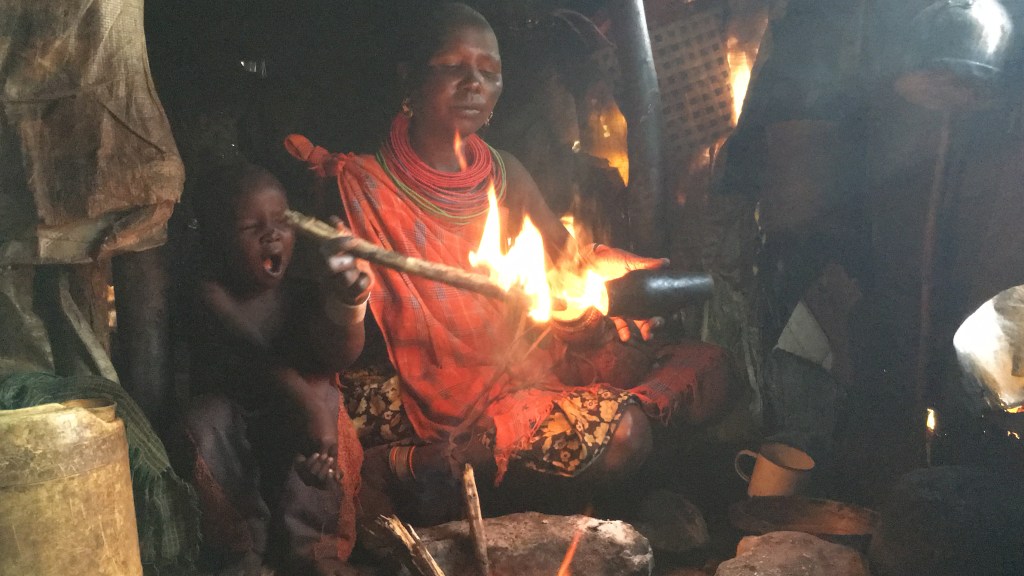

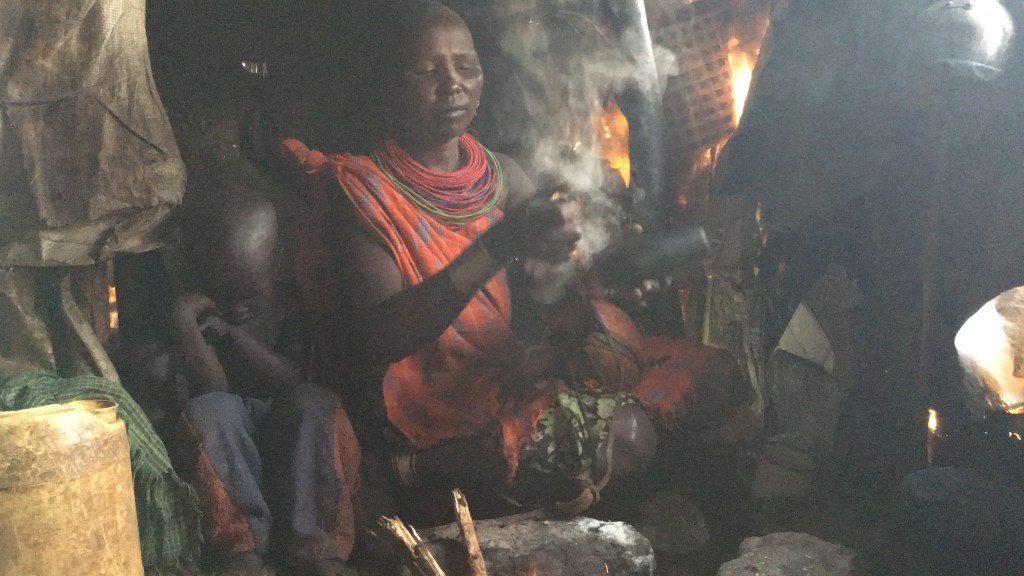


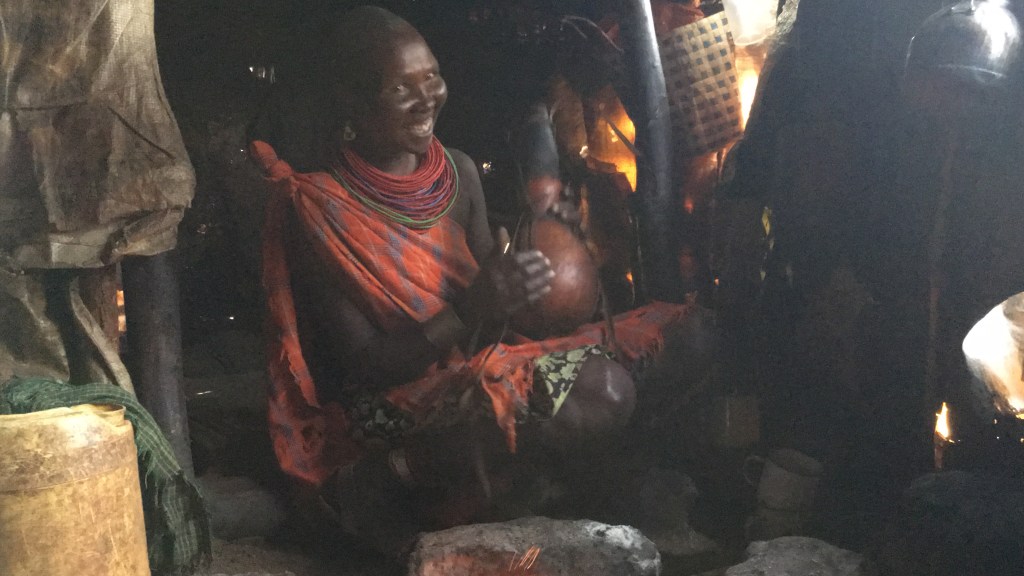
Most lmala are made from wood. When you go to the region, people will translate “lmala” as “calabash.” As gourd milk containers are few in number, I think it is best to translate “lmala” as “milking container.” I have met one woman who I know for a fact sometimes uses more than one wood time in order to influence the final flavor and aroma of the milk. The fine tuning in terms of taste comes with how the lmala is cleaned after it has been sufficiently heated. Care in cleaning means everything!
Making Lmala, Samburu Milking Containers


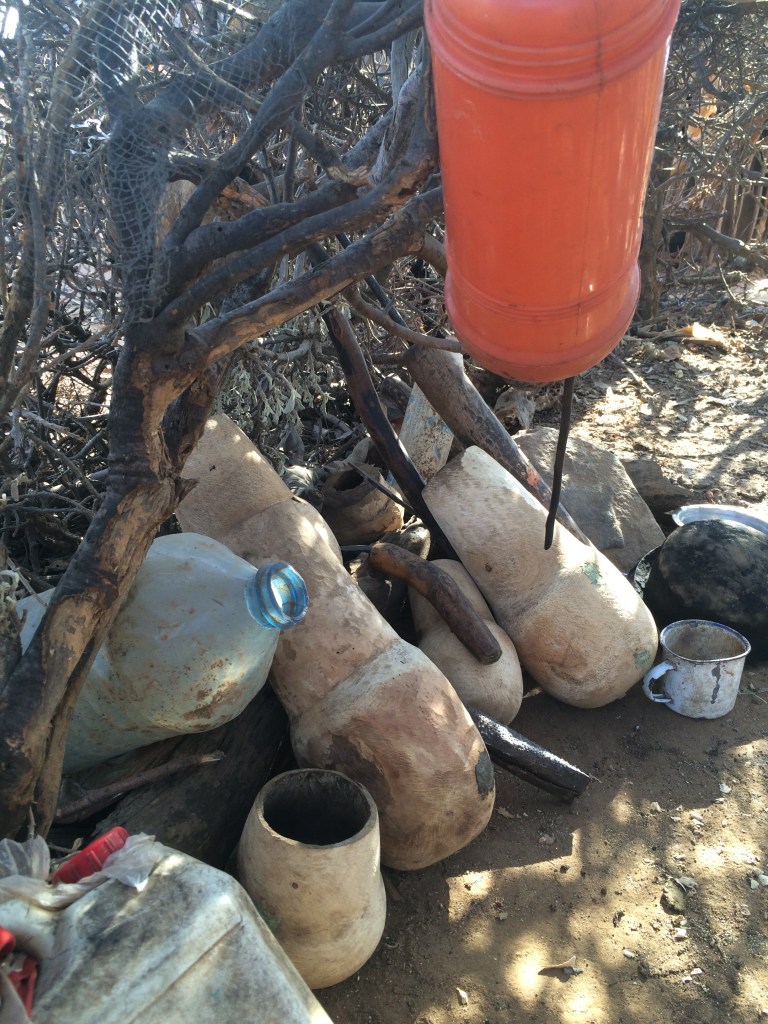

We see here one gourd container in the upper left image, but all the others are made of wood. I took the photos of unfinished lmala in 2018 as I was walking around the manyatta in the West Gate Conservancy, where I was staying. The inside is carved out by softening the wood by burning with embers and then scraping the ash with a shallow spoon-shaped carving tool forged by a local blacksmith. Very thin walls and elegant containers are crafted using this carving system.
 Samburu Research