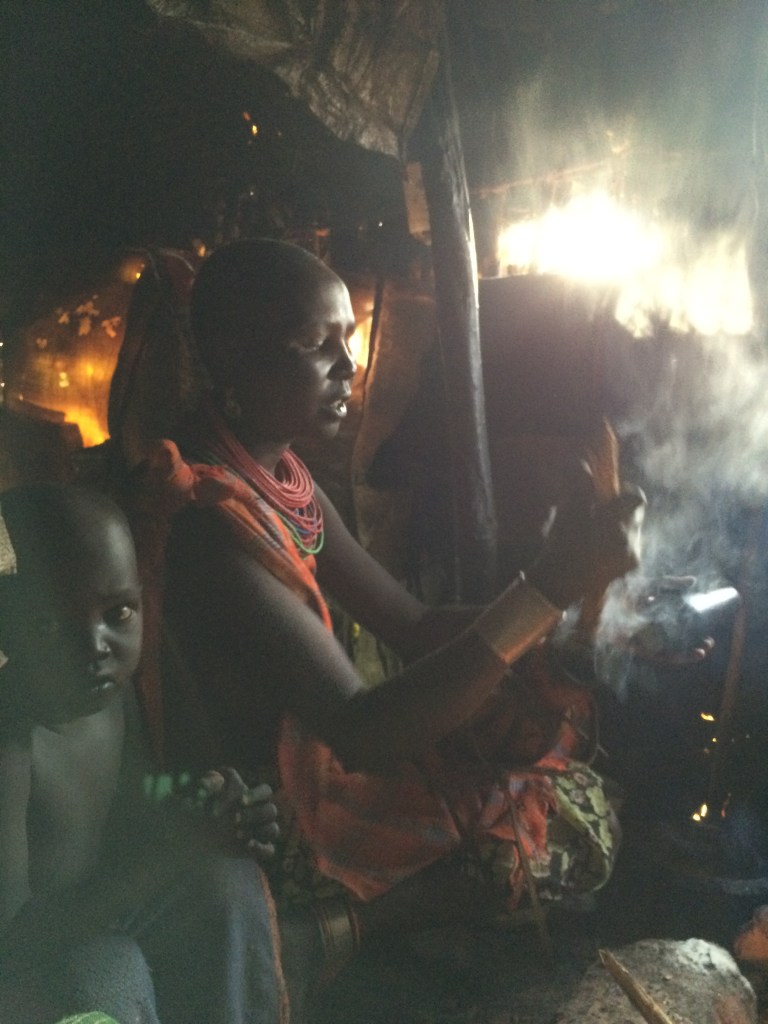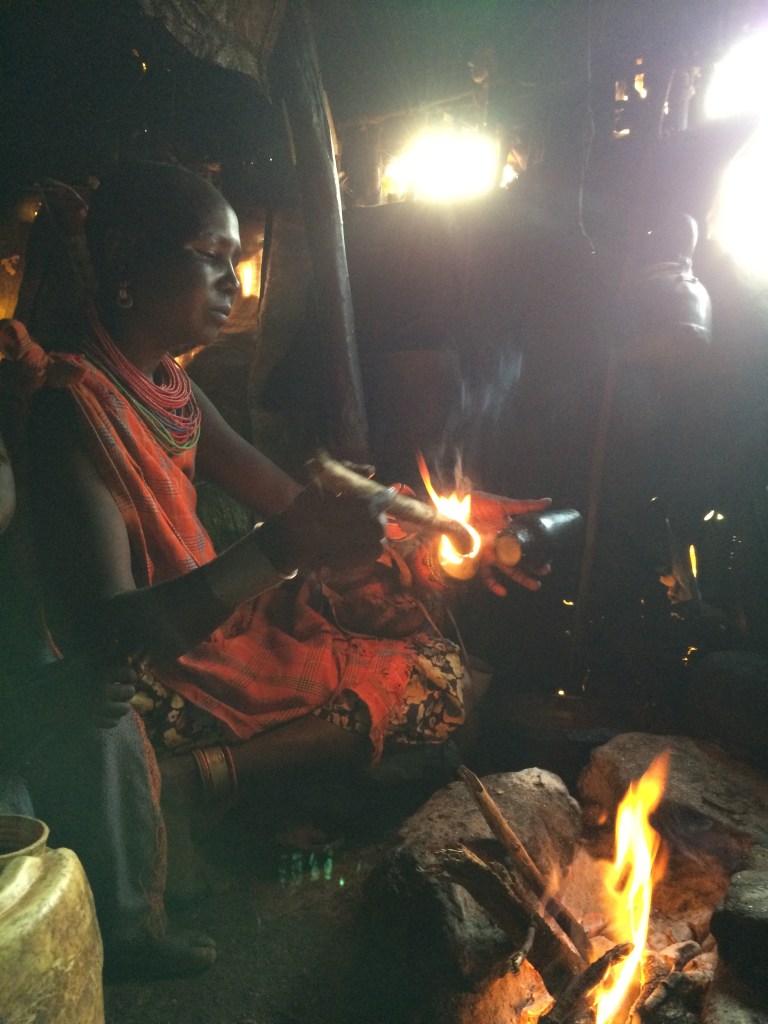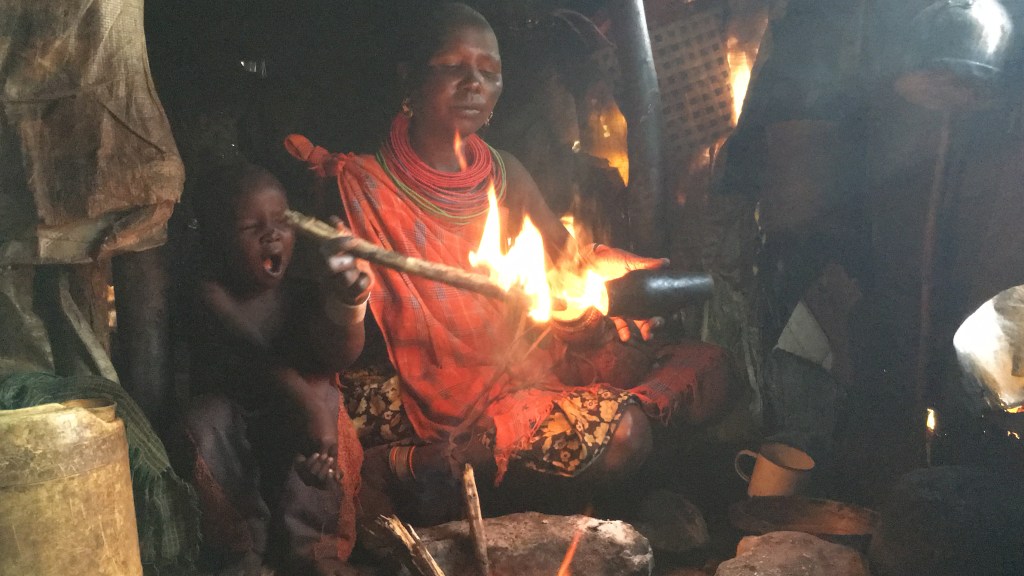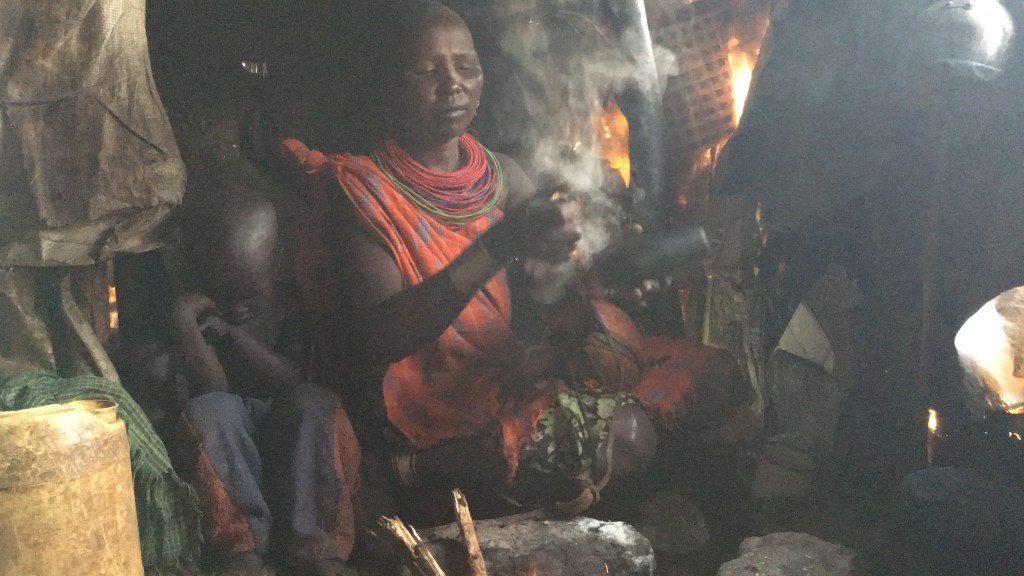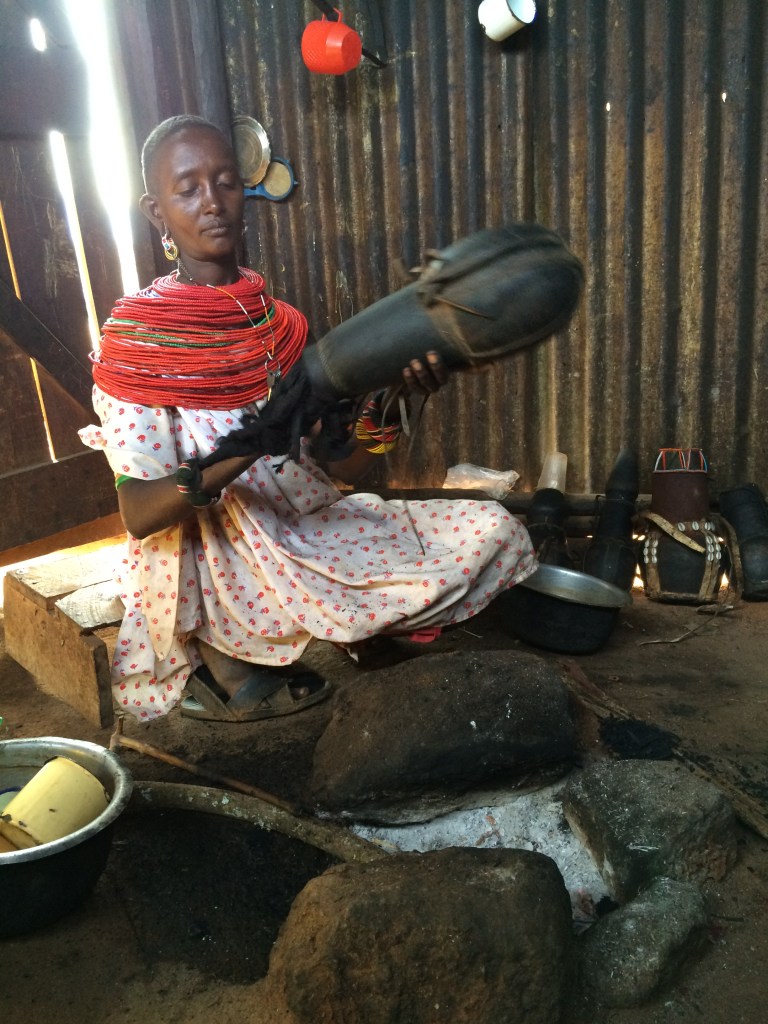
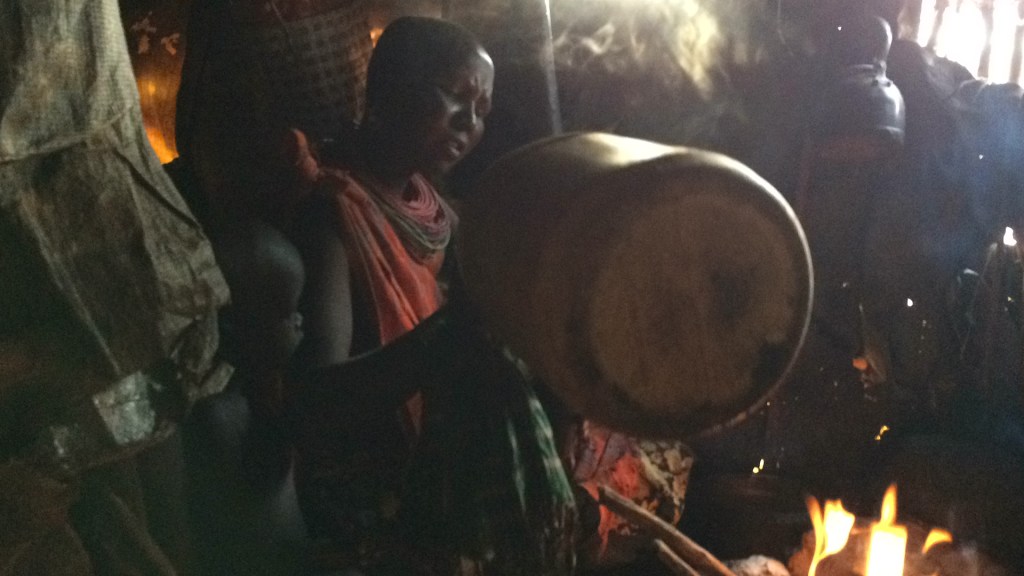
Samburu woman cleaning a lmala — milking container

This wooden hand carved lmala, milking container, has just been sterilized with burning sticks. What we see here is the process in which the container is wiped to eliminate embers and ash.

The Samburu do not like milk with bits of ember or ash in it. Other tribes in the region serve milk with black specks from the process of sterilizing with burning sticks, so preference for a milk that is totally clean, totally white when poured , which is how most of the world prefers the milk, in this context is a cultural preference amongst the Samburu. Their white milk – and the milk will be left in the lmala to ferment to one of their preferred stages of consumption – differentiates it from some of the milks from other nearby tribes, like the Turkana.

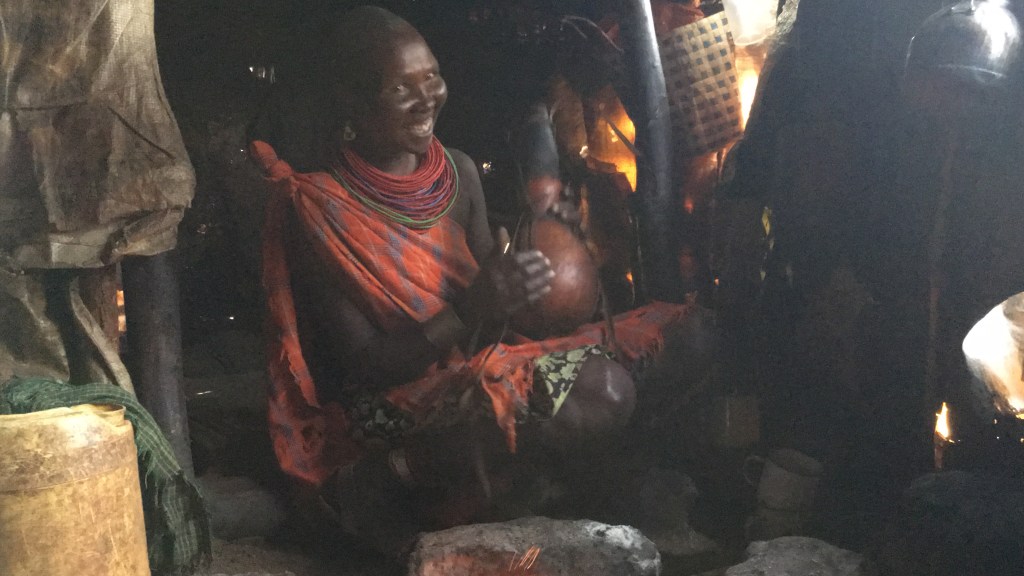
This woman, and I apologize for forgetting her name, is the wife of Chief Stephen Loldepe. I have stayed with her. They live in a concrete house. This is an outdoor kitchen retaining the three rock kitchen fire emplacement common to the manyatta stick huts.

Samburu have long been semi-nomadic pastoralists, so their traditional buildings can be disassembled, with the larger stick used for the hut framework can be re-used. This is a modern outdoor kitchen with tall galvanized walls.
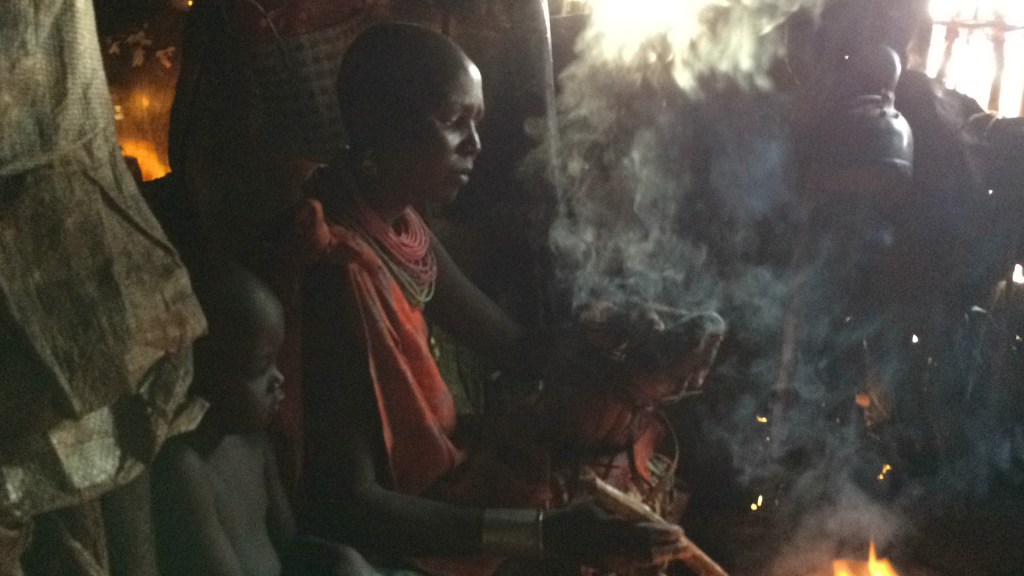
Samburu milk cuisine: cleaning with fire

Most lmala are made from wood. When you go to the region, people will translate “lmala” as “calabash.” As gourd milk containers are few in number, I think it is best to translate “lmala” as “milking container.” I have met one woman who I know for a fact sometimes uses more than one wood time in order to influence the final flavor and aroma of the milk. The fine tuning in terms of taste comes with how the lmala is cleaned after it has been sufficiently heated. Care in cleaning means everything!

Making Lmala, Samburu Milking Containers

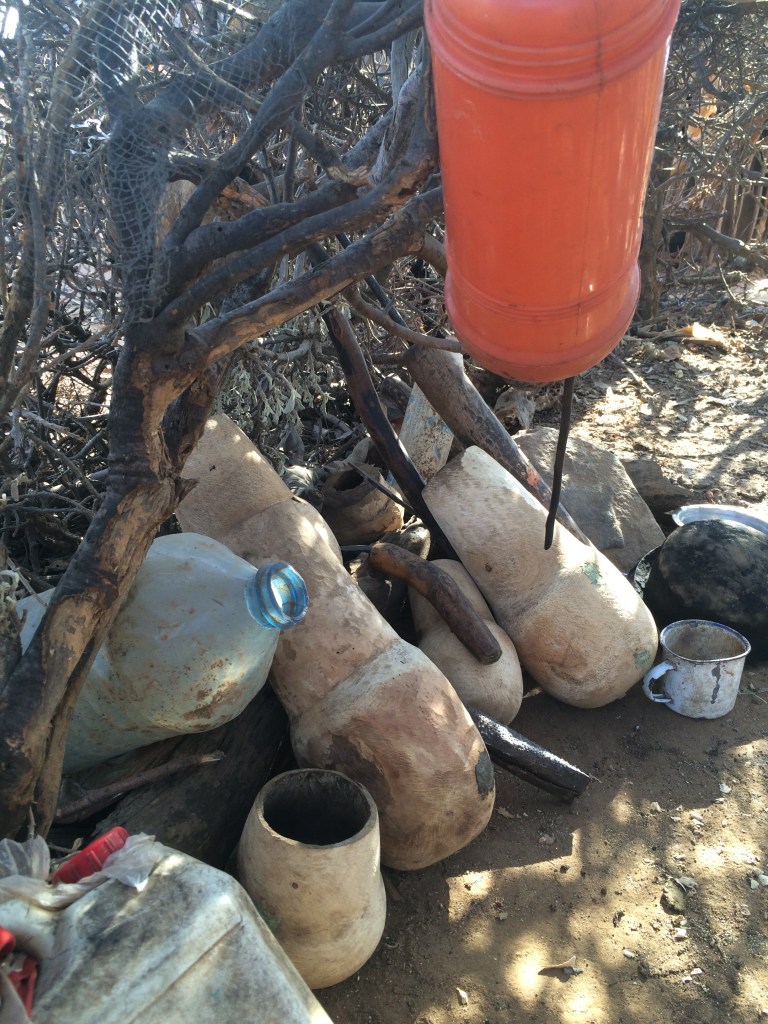
We see here one gourd container in the upper left image, but all the others are made of wood. I took the photos of unfinished lmala in 2018 as I was walking around the manyatta in the West Gate Conservancy, where I was staying. The inside is carved out by softening the wood by burning with embers and then scraping the ash with a shallow spoon-shaped carving tool forged by a local blacksmith. Very thin walls and elegant containers are crafted using this carving system.